How to Determine if Bathroom Sink Taps Are a Standard Size
Are you tired of guessing whether your bathroom sink taps will fit your existing setup? If you’ve ever felt frustrated trying to find the right faucet, you’re not alone. Many people struggle with matching sizes and styles when updating or replacing bathroom fixtures.
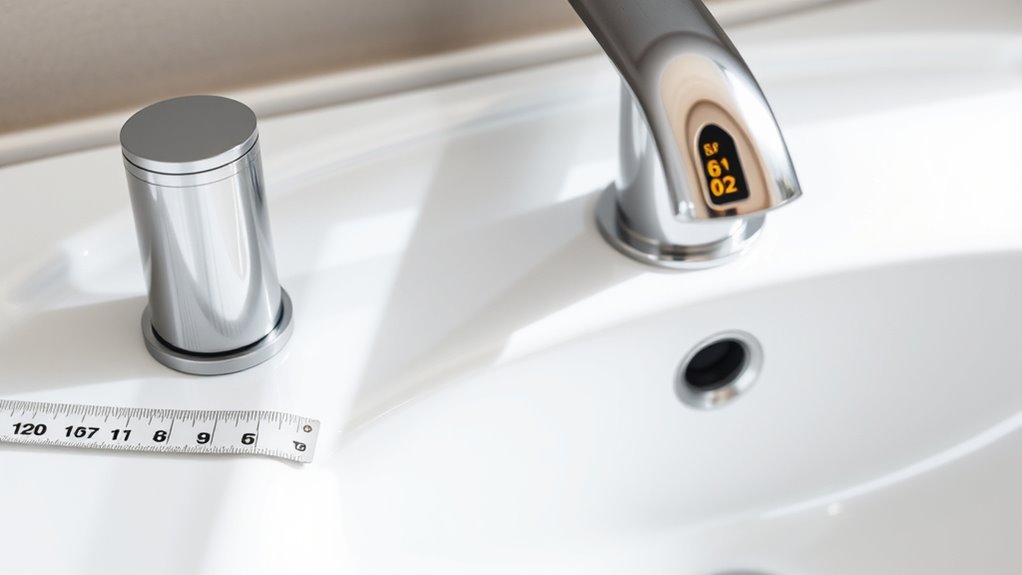
To determine if your bathroom sink taps are a standard size, start by measuring the faucet’s base diameter, spout reach, height, and the distance between mounting holes.
Check the thread type and diameter to verify compatibility with existing plumbing. Most standard sizes have familiar measurements like 1-3/8 inches for hole diameter and 4-8 inches for hole spacing.
If you’re unsure, understanding these details helps you find the right fit—continue exploring to learn more about matching your faucet perfectly.
Key Takeaways
- Measure the distance between the centers of the sink faucet holes. Standard sizes are usually 4 inches or 8 inches apart.
- Check the mounting hole diameter; most fixtures need about 1-3/8 inches (35mm).
- Verify the thread type and size, like ½-inch or ⅜-inch, to make sure it fits your existing plumbing.
- Compare the faucet’s spout height and reach with common dimensions—around 6-8 inches tall and 4-6 inches out.
- Look at manufacturer specifications or product labels to see if the faucet matches standard sizes.
How Do I Know What Size My Bathroom Sink Tap Is?
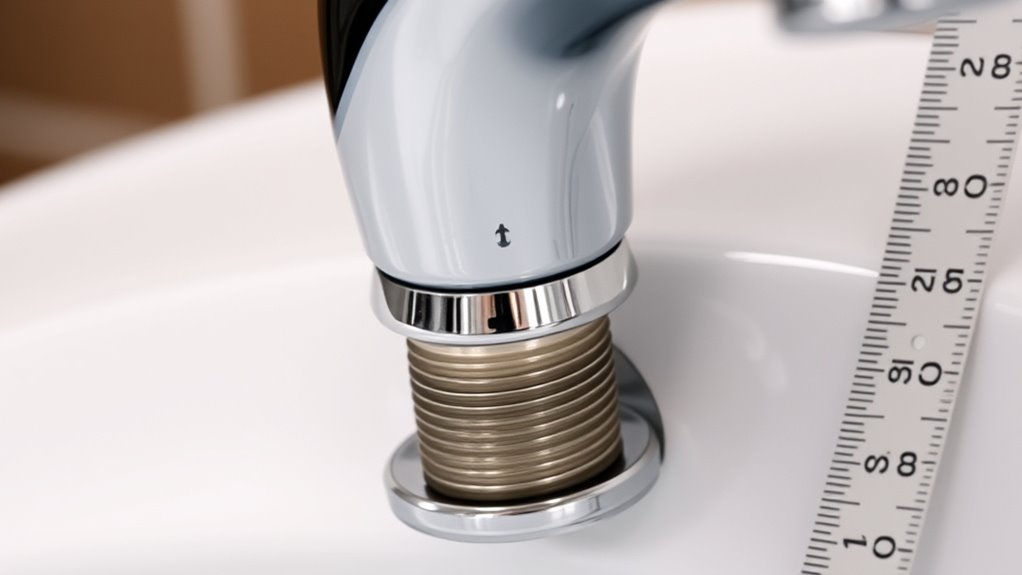
To figure out the size of your bathroom sink tap, start by measuring the existing faucet. Check where the tap connects to the sink; most fittings are either ½-inch or ⅜-inch.
Next, look at the overall height and spout length. These details affect water flow and how easy it is to use the sink. When shopping for a new tap, pick a decorative finish that matches your bathroom style, like brushed nickel or chrome.
Make sure the new tap will fit your space too. Water flow matters—higher flow rates fill the sink faster, but lower rates conserve water. Use a ruler or tape measure to get exact measurements of the faucet’s base and spout reach.
If your current faucet works well, these measurements will help you find a similar size. Getting the right measurements ensures your new faucet fits well and provides the water flow you want. This makes your bathroom both functional and stylish.
What Are the Standard Sizes for Bathroom Sink Faucets?
Bathroom sink faucets typically follow standard sizes, making it easier to find replacements or upgrades. Most common sizes are designed to fit standard sink holes, so you can quickly identify the right fit for your bathroom. Standard dimensions include the spout height, reach, and mounting hole diameter.
Here’s a quick overview:
| Feature | Standard Size/Range |
|---|---|
| Spout height | 6-8 inches |
| Spout reach | 4-6 inches |
| Mounting hole diameter | 1-3/8 inches (about 35mm) |
Knowing these standards helps with faucet maintenance, ensuring compatibility and preventing leaks. When selecting a faucet, consider water-saving tips like installing aerators to conserve water while maintaining functionality.
Following standard sizes also makes replacing parts easier, helping with faucet upkeep and efficiency.
Measuring Your Faucet: Diameter, Length, and Fitting Size
Measuring your faucet accurately is essential to ensure a proper fit when replacing or upgrading it. Start by checking the diameter of the faucet’s spout and base, which affects water flow and the overall look.
Accurately measuring your faucet ensures a perfect fit and a seamless upgrade.
Use a ruler or caliper to measure the diameter at the widest points. Then, measure the length from the base to the outlet to make sure your new faucet lines up correctly with your sink.
This length also impacts how the faucet looks and functions. Finally, determine the fitting size by measuring the threaded or connection area where the faucet attaches to the pipes.
Getting precise measurements helps you pick a faucet that looks good and provides smooth water flow. Keep a record of these dimensions so you can compare them with manufacturer specs.
This ensures your new faucet will fit perfectly without any guesswork. Taking these steps guarantees a seamless upgrade that improves your sink’s style and performance.
Identify Your Sink’s Thread Type and Fitting Compatibility
Want to make sure your faucet fits just right? The first step is figuring out your sink’s thread type and checking if it matches the fittings you plan to use. To do this, grab a tape measure and carefully measure the diameter of the threads. Once you have that number, compare it to standard thread sizes to see if they match up.
Getting these details right ensures you pick the right fittings and helps you avoid pesky leaks or installation headaches down the line. It’s all about making sure everything fits snugly and securely from the start.
Types of Thread Standards
Have you ever wondered why some sink faucets fit perfectly while others don’t? It’s mainly because of different thread standards. Knowing these helps you avoid issues like pipe corrosion or water pressure problems.
There are three main thread types:
- NF (National Fine) offers a tighter seal, making it great for high water pressure. But it’s more prone to pipe corrosion.
- NC (National Course) is easier to install and less likely to seize up. It’s better suited for lower pressure systems.
- PT (Pipe Thread) is commonly used for plumbing fittings and helps ensure compatibility with various fixtures.
Matching the right thread standard guarantees a secure connection. This reduces leaks and helps prevent damage over time.
Proper identification of thread types makes sure your sink’s fittings work smoothly with your water system.
Measuring Thread Diameter
Ever wonder how to tell if your sink’s thread size matches your faucet or fittings? To do this, you’ll need to measure the thread diameter accurately.
Start by removing the faucet aerator or any existing fitting, so the threaded pipe is exposed. Use a ruler or, better yet, a caliper to measure the outside diameter of the threads in millimeters or inches.
Knowing this measurement helps you pick compatible fittings. Mismatched threads can cause leaks or poor water pressure, which can affect your sink’s performance.
Getting the measurement right prevents you from buying the wrong parts and ensures a proper seal. Remember, standardized thread sizes are common for faucets and aerators, so matching the diameter is key when choosing a new faucet aerator or replacement fittings.
Compatibility With Fittings
After measuring your sink’s thread diameter, the next step is to identify the thread type and make certain your fittings are compatible. This guarantees your bathroom aesthetics remain seamless and water pressure stays consistent. To do this:
- Check if your threads are standard (e.g., 55/64”-27 or 15mm). This affects how well fittings connect.
- Confirm the fitting material matches your tap to avoid leaks and maintain water flow.
- Verify the thread direction (right or left-handed) to prevent installation issues.
Matching thread types and fittings ensures your tap works properly, prevents leaks, and preserves water pressure. Making certain of compatibility also keeps your bathroom looking cohesive and functional. Properly fitted components improve both aesthetics and performance.
—
Modified version:
After measuring your sink’s thread diameter, your next step is identifying the thread type and making sure your fittings are compatible. This helps keep your bathroom looking seamless and your water pressure steady.
First, check if your threads are standard, like 55/64”-27 or 15mm. This affects how well fittings connect. Then, make sure the fitting material matches your tap to avoid leaks and keep water flowing smoothly.
Finally, verify the thread direction—whether it’s right or left-handed—to prevent installation issues. Matching thread types and fittings ensures everything works properly and prevents leaks.
Getting these details right also keeps your bathroom looking cohesive and functioning well. Properly matched components enhance both the look and the performance of your fixtures.
When Do You Need Non-Standard Faucet Sizes?
There are times when standard faucet sizes just don’t fit, especially if you’re working with custom or vintage sinks.
If your sink has a unique glass design or offers specific color options, off-the-shelf faucets might not match your aesthetic or functional needs. Non-standard faucet sizes are often necessary for these specialized styles or older sinks that weren’t built with today’s standards in mind.
| Scenario | Reason |
|---|---|
| Custom vintage sinks | Unique dimensions or connectors |
| Sinks with intricate glass design | Requires precise fitting to preserve style |
| Specific color-matched faucets | Larger or smaller size for visual harmony |
| Antique or retro bathroom fixtures | Non-conforming hole spacing |
| Designer or themed bathrooms | Unique sizes to match overall look |
In short, these situations call for non-standard sizes to ensure the faucet fits well and looks just right.
Tools You Need to Measure Your Faucet at Home
So, you want to measure your faucet at home? No worries! All you really need are a few simple tools, like a ruler or a tape measure. It’s pretty straightforward — just be sure to use the right techniques to get accurate measurements. That way, you won’t have to guess and can be confident you’re getting the right size details. When you’ve got the proper tools, measuring becomes quick and hassle-free!
Essential Measuring Tools
Having the right measuring tools makes it simple to determine your faucet’s size accurately. Precise measurements help ensure proper installation and keep the water pressure consistent.
To measure your bathroom sink tap effectively, you’ll need three essential tools:
- A flexible tape measure – for capturing dimensions like spout reach and height easily.
- A ruler or caliper – for exact diameter measurements of the faucet stem and openings.
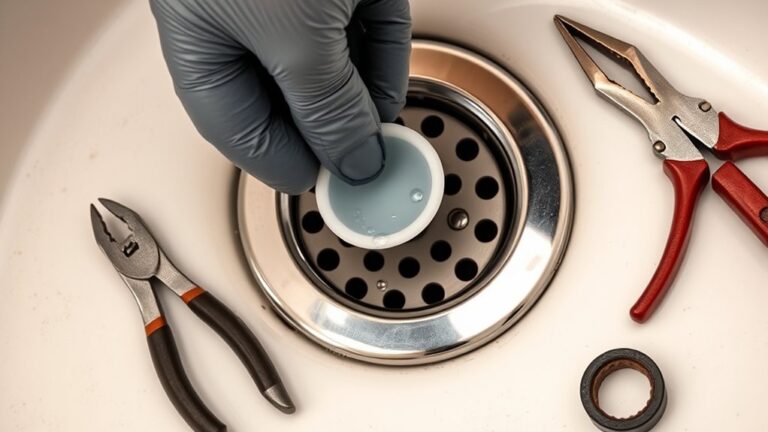
- A wrench or adjustable pliers – to loosen fittings if you need to check internal parts or swap out the faucet later.
Having these tools ready saves time and eliminates guesswork, helping you find a faucet that fits perfectly and works smoothly—whether for new decor or better water flow.
Proper Measurement Techniques
Measuring your bathroom sink tap accurately requires using the right tools and applying proper techniques. Start by gathering a tape measure or a ruler, making sure they’re clean for precise readings. Cleaning tips help maintain measurement accuracy.
To measure the faucet’s diameter or length, position the tape or ruler straight across the relevant parts, like the spout or handle. For threaded parts, use a thread gauge if available. Take several readings to confirm consistency.
Proper measurement techniques also involve noting the distance between mounting holes or screws, which is important for installation guides. Removing any debris or mineral buildup around the fitting will improve accuracy.
This careful approach helps ensure replacements or upgrades fit perfectly, following best practices found in your installation guides.
Understanding Faucet Holes and Center-to-Center Measurements
- Measure the distance between the centers of the two faucet holes.
- Check if there’s a single hole for a monobloc faucet.
- Confirm the size and position of the holes to ensure compatibility with water flow options and finish styles.
Matching these measurements with faucet specs guarantees easy installation and good water flow.
For a polished look, pick a finish that complements your sink design.
Accurate measurements prevent leaks, keep the faucet stable, and help you choose a style you love.
Matching a Replacement Faucet to Your Sink’s Setup
When you’re picking out a replacement faucet, it’s really important to check how it mounts. You want to make sure the mounting type matches your sink’s setup so everything fits just right. Take a look at whether the faucet is compatible with your sink material and whether it’s designed for wall mounting or deck mounting.
Getting these details sorted out beforehand makes a big difference. It helps you find a faucet that not only fits securely but also works properly without any hassle.
Measuring Mounting Type
How do you determine the mounting type of your sink so you can find a compatible replacement faucet? First, check the existing faucet’s mounting style, which could be single-hole, centerset, or widespread. You’ll need to measure the distance between mounting holes, especially with widespread types, to ensure proper fit.
Second, consider whether your sink supports water conservation. Look for faucets designed with eco-friendly materials that reduce water usage. Third, confirm that the mounting hardware matches your sink’s setup for a secure installation.
Key points to remember are:
- Single-hole faucets fit one mounting point.
- Centerset faucets connect with a 4-inch spacing.
- Widespread faucets require additional measurements for multiple holes.
Matching these details helps you find a faucet that’s compatible and environmentally conscious.
Compatibility With Sink Material
Choosing a replacement faucet that matches your sink’s material ensures a secure fit and long-lasting performance. Different materials, like porcelain, stainless steel, or composite, need specific faucet types to avoid damage and leaks.
For example, porcelain sinks are delicate and require gentle installation, while stainless steel is sturdy and more flexible. To save water, look for faucets with eco-friendly features like low-flow aerators. These help cut water use without hurting performance.
Make sure to consider the sink’s mounting surface and material to prevent issues like corrosion or cracks. This way, your new faucet will work perfectly with your sink, blending style and functionality.
Wall-Mounted vs. Deck Mount
Understanding whether your sink is wall-mounted or deck-mounted is key to choosing the right faucet. This decision impacts your bathroom’s look and how water pressure works.
Wall-mounted faucets give a sleek, modern vibe and offer more flexibility in sink placement. Deck-mounted faucets sit on top of the sink or counter, providing stability and easier installation.
To pick the right one, start by inspecting your sink to see how it’s mounted. Next, think about water pressure because wall-mounted setups might need different plumbing.
Also, consider your bathroom style. Wall-mounted faucets create a minimalist look, while deck mounts are more classic. Making the right choice ensures your faucet fits well, works smoothly, and complements your decor.
Troubleshooting Size Mismatches and Fitting Issues
When you run into a size mismatch or fitting issue with your bathroom sink tap, quick troubleshooting can save you time and effort. First, check if the tap’s threading matches the existing fittings to make sure it’s designed for the same size and type.
If decorative finishes are causing compatibility problems, keep in mind that some finishes can add slight thickness, which might affect how tightly everything fits. Measure the diameter of the existing pipe and compare it to the tap’s inlet size to be sure.
For water flow issues, check if the aerator or cartridge fits properly. A loose connection can reduce flow efficiency. Tighten fittings with a wrench but avoid over-tightening, as this can damage parts.
If you notice leaks or loose fittings, it’s a good idea to replace worn washers or seals. Addressing these issues early helps prevent bigger leaks or water flow problems later.
Matching and installing your tap correctly ensures smooth, leak-free operation every time.
When to Call a Professional for Faucet Sizing Help
If you’ve tried troubleshooting your faucet size issues and still can’t get everything to fit or work properly, it might be time to call in a professional. Incorrect faucet sizing can mess up the installation and disrupt how water flows, causing leaks or poor performance.
You should reach out to a pro if you’re unsure about the right size for your sink or water needs. Multiple attempts to adjust or fit the faucet without success is another sign. Also, persistent leaks or inconsistent water pressure despite changes indicate it’s time to get expert help.
A plumbing specialist can measure and match faucet sizes accurately, making sure everything’s installed correctly and water flows smoothly. They can identify compatibility issues and help you avoid future problems.
Don’t risk damage or reduced efficiency by ignoring these issues. Sometimes, special tools and experience are necessary to do the job right from the start.
Frequently Asked Questions
Do Different Brands Use the Same Standard Sizes?
Different brands often use the same standard sizes, making it easier for you to find compatible faucet materials and fixtures.
However, variations can happen based on water pressure needs and design choices. To make sure it fits well, measure your current faucet or check the manufacturer’s specs.
This way, you can confidently pick a replacement that matches standard sizes, ensuring water flow and fixture compatibility without any surprises.
Can I Use a Larger or Smaller Faucet Than the Existing Hole Size?
Did you know most bathroom sink faucets follow industry standards? Usually, you can’t use a larger or smaller faucet than the existing hole size without facing issues.
Faucet compatibility depends on matching hole size standards. If there’s a mismatch, it can lead to leaks or unstable installation.
If the hole is too small, enlarging it could weaken the sink. A smaller faucet simply won’t fit.
To avoid problems, stick to standard sizes for a secure and proper fit.
How Do I Identify the Model Number of My Faucet?
To identify your faucet model number, start by examining the faucet itself for a label or engraving, often located near the base or under the sink.
Check the faucet’s material, like chrome or stainless steel, which can help you narrow down your options.
Use installation tools to carefully remove the faucet or handle, revealing the model number.
Once you find it, make sure to note this info so you can select compatible replacement parts or fittings.
Are There Universal Adapters for Non-Standard Faucet Sizes?
Yes, universal adapters can help with faucet compatibility issues. They’re designed to fit many non-standard faucet sizes, making installation much easier.
You just need to pick an adapter that matches your faucet’s measurements. It can connect to both standard and irregular fittings without much hassle.
These adapters are available at most hardware stores or online. They’re a simple solution if your faucet doesn’t conform to typical sizes.
How Long Does It Take to Replace a Bathroom Sink Tap?
Replacing a bathroom sink tap usually takes about an hour, but it depends on your experience.
You’ll want to consider factors like showerhead compatibility and drain assembly types. First, turn off the water supply, then disconnect the supply lines.
Next, remove the old faucet and install the new one, making sure everything is sealed properly.
If you run into tight fittings or tricky drain assemblies, it could take a bit longer.
Take your time to avoid leaks and make sure everything fits well.
Conclusion
Knowing the right size for your bathroom sink tap ensures an easy upgrade or repair, saving you time and hassle.
Did you know that over 70% of faucet installation issues come from sizing mismatches? Taking accurate measurements and understanding standard sizes can help you avoid these common problems.
When in doubt, consulting a professional guarantees a perfect fit, making the process smoother.
With a little knowledge about bathroom sink tap sizes and attention to detail, you’ll keep your bathroom looking great and functioning smoothly for years to come.