5 Steps When Drano Doesn’t Work in Your Bathtub
Dealing with a clogged bathtub is frustrating, and you’re not alone in facing this annoying problem. Many people struggle with slow drains or standing water, especially after trying popular remedies like Drano.
If you’ve already attempted these solutions and your tub is still backed up, it’s time to consider what’s next.
If Drano doesn’t clear your bathtub clog, start by identifying the cause—hair, debris, or buildup.
Try using a drain snake to grab or break up the clog, then use a plunger to push it through.
If these don’t work, it’s time to call a plumber, especially if odors or strange sounds happen.
Regular maintenance and prevention tips can help avoid future issues.
For more detailed steps, keep exploring the options available to you.
Key Takeaways
- Remove the drain cover and use a drain snake to manually dislodge or hook debris. This can often clear out what’s blocking the drain.
- Try a plunger with a proper seal and give quick, forceful pushes. Sometimes that’s enough to clear up the clog.
- Avoid repeatedly using chemical drain cleaners. They can actually make buildup worse or damage your pipes over time.
- Call a professional plumber if DIY methods don’t do the trick or if you notice foul odors or strange noises coming from the drain.
- For prevention, use drain guards, avoid pouring grease down the drain, and schedule regular inspections to keep everything flowing smoothly.
Identify What’s Causing Your Bathtub to Clog
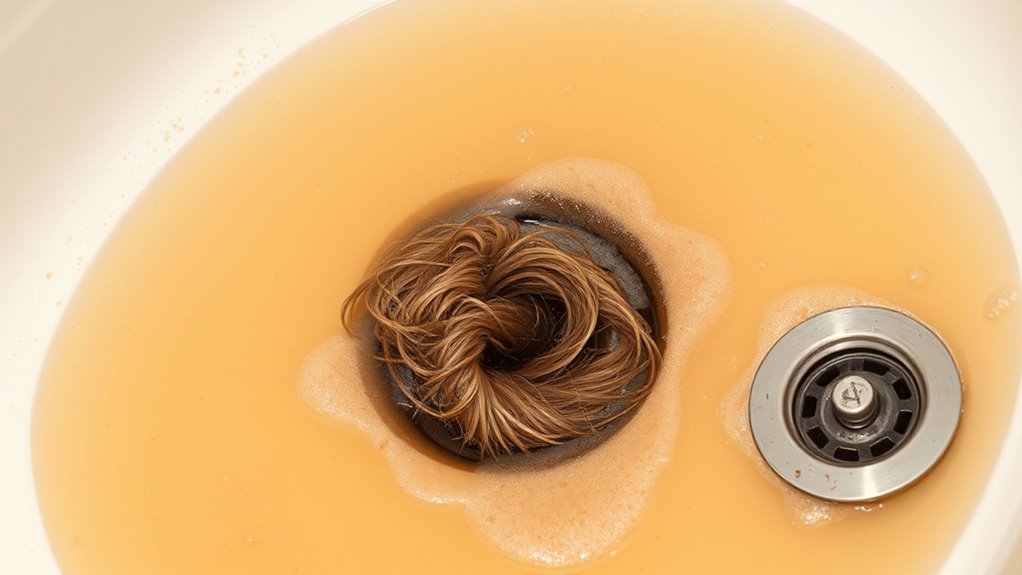
Before trying to clear your clogged bathtub, it’s important to understand what’s causing the blockage. Sometimes, chemical remedies seem like the easiest fix, but they work best when you identify what’s blocking your drain.
Hair is a common culprit, forming compacted clumps that trap soap scum and debris. Over time, mineral buildup from hard water can also contribute, especially if hair and soap combine.
Toys or small objects that get accidentally flushed can cause sudden clogs, too. By figuring out what’s causing the jam, you can decide whether DIY methods will do the trick or if more advanced tools are needed.
Using chemicals might break down some blockages, but they’re ineffective against physical obstructions like hair or foreign objects.
Understanding the root cause saves you time and prevents unnecessary use of harsh chemicals that could damage your pipes. Take a close look, and you’ll be better prepared for the right approach.
Try Simple Tools First: Remove the Blockage With a Drain Snake
Once you’ve identified the likely cause of the clog, trying a simple tool like a drain snake is often the next best step. Chemical solutions sometimes fail because the blockage is too solid or compacted.
Before resorting to harsh chemicals, remove any drain covers to access the drain opening easily. Use a drain snake—an inexpensive tool designed to break up or hook onto the clog—by inserting it into the drain and rotating it to dislodge or pull out debris.
Remove drain covers and use a drain snake to dislodge or pull out clogs efficiently.
Be gentle but firm; avoid forcing the snake, which can damage pipes. If you encounter a stubborn clog, work the snake back and forth to catch or break up the obstruction.
Afterward, flush the drain with hot water to clear any remaining debris. Using a drain snake is an effective, eco-friendly option that saves you from unnecessary chemical exposure while clearing the blockage efficiently.
Use a Plunger Effectively to Clear the Drain
If a drain snake doesn’t work, using a plunger properly can often break up or dislodge the clog. Start by covering the drain completely with the cup of the plunger, making sure there’s a tight seal.
Fill the bathtub with enough water to submerge the rubber part of the plunger. This creates pressure that helps push against the clog.
Use quick, forceful pushes to force air and water into the pipe. This motion can help loosen the blockage. Repeat this several times, keeping the seal intact each time.
After using the plunger, clean it thoroughly to avoid bacteria buildup. DIY solutions like this are cheap and simple, but consistency is key.
If the drain stays clogged after multiple attempts, try other methods or call a professional. Proper plunger use is an easy maintenance tip that can save you both time and money, making it a reliable first step before more invasive fixes.
When and How to Call a Plumber for Persistent Clogs
Sometimes, persistent clogs just won’t budge no matter how many DIY remedies or chemical solutions you try. That’s usually a sign it’s time to call in a professional. If your drain stays clogged even after using a plunger or trying store-bought drain cleaners, there’s probably a deeper issue at play.
You should consider calling a plumber if DIY methods keep failing or if you notice foul odors, strange sounds, or water pooling. A plumber has specialized tools, like drain cameras and augers, to pinpoint and fix stubborn clogs safely and effectively.
Don’t keep pouring chemicals or forcing DIY fixes—this can cause damage or make the problem worse. When you contact a plumber, explain what you’ve tried and what chemicals you’ve used already. Scheduling an inspection promptly will help handle the clog correctly without risking damage to your plumbing system.
Prevent Future Bathtub Clogs With Regular Maintenance
Regular maintenance is key to keeping your bathtub drain flowing smoothly and avoiding stubborn clogs.
Routine upkeep ensures smooth draining and prevents stubborn clogs over time.
You can do this by practicing simple prevention techniques and checking your sink regularly.
Avoid pouring grease, hair, or large debris down the drain, and use a drain guard to catch these before they go further.
Periodically flush your drain with hot water or a mix of baking soda and vinegar to help break down buildup.
Cleaning the drain stopper and around it also prevents grime from accumulating.
These steps lower the risk of blockages and help water drain easily.
Scheduling routine inspections and small cleaning sessions can catch issues early.
Consistent sink care not only extends the life of your drain but also avoids costly repairs.
Frequently Asked Questions
How Long Should I Wait After Using Drano Before Trying Other Methods?
You should wait at least 30 minutes to an hour after using Drano before trying other methods. This gives the chemical reactions enough time to finish.
Waiting also helps reduce the chance of causing damage or unsafe chemical interactions. Keep in mind, repeated use can hurt the environment and increase hazards.
If the clog is still there, try mechanical methods or call a professional instead of using more chemicals.
Are There Natural Alternatives to Chemical Drain Cleaners?
Yes, there are eco-friendly solutions and DIY remedies you can try as natural alternatives to chemical drain cleaners. You might pour a mixture of baking soda and vinegar, which creates a foaming action that can help clear minor clogs.
Furthermore, hot water combined with salt or using a plunger can loosen debris. These methods are eco-conscious, inexpensive, and often effective for minor blockages, safely maintaining your plumbing without harsh chemicals.
Can Hair or Soap Scum Cause Persistent Bathtub Clogs?
Yes, hair buildup and soap scum can cause persistent bathtub clogs. When hair gets tangled and caught on soap residue, it creates a stubborn blockage that traps debris.
This makes it really hard for water to drain properly. Soap scum can also build up over time, narrowing the drain even more.
Regularly cleaning your drain, removing visible hair, and using drain covers can help prevent these buildup issues. Doing so keeps your tub flowing smoothly.
What Are Signs My Drain Might Be Severely Damaged?
Your drain might be severely damaged if you notice persistent, foul odors or water draining very slowly, like a sinkhole swallowing everything.
Watch for signs like leaks, especially around joints, or strange gurgling sounds that echo failure inside.
These signs often point to pipe corrosion or root intrusion, showing that your plumbing’s integrity is compromised.
Addressing these early helps prevent more serious, costly damage down the line.
Is It Safe to Use a Drain Snake Repeatedly?
Using a drain snake repeatedly isn’t safe because it can cause chemical reactions with any remaining drain cleaner, increasing the risk of plumbing damage.
Overuse can also weaken pipes or cause cracks, which might lead to costly repairs.
To keep your plumbing safe, limit how often you use a drain snake and consider calling a professional if clogs keep coming back.
Always make sure your drain is free of chemical residues before trying to remove a clog manually.
Conclusion
When DIY methods fall short, calling a professional guarantees your bathtub stays clear and functional. It’s important to address stubborn clogs early to prevent more serious issues down the road.
Remember, over 70% of drain clogs are caused by soap scum and hair buildup. Without proper removal, these can worsen, making the clog harder to fix.
Regular maintenance and prompt attention help prevent bigger problems and costly repairs. Don’t ignore recurring clogs—tackle them as soon as they appear.
Keeping your drains clear, especially when Drano doesn’t work, saves you money and keeps your bathroom safe and hygienic. Stay proactive, and your bathtub will thank you!