How to Troubleshoot Noisy Air Water Heat Pumps
Many people struggle with noisy air water heat pumps, which can be both frustrating and disruptive. If your heat pump is making strange sounds, you’re not alone—noise issues are common and often fixable with a little troubleshooting.
To troubleshoot noisy air water heat pumps, start by listening carefully to identify whether the sounds are rattling, buzzing, or banging. Check for loose parts, screws, or panels that might cause vibrations, and tighten or secure them.
Inspect filters and fans for dirt or damage, and remove ice buildup if present. Regular maintenance can prevent many noise issues. If these steps don’t resolve the problem, there’s more you can do to guarantee quiet, efficient operation.
Key Takeaways
- Listen carefully and inspect the unit to find where the noise is coming from. Look for any loose or vibrating parts that might be causing the sound.
- Check if there’s ice buildup or frost on the system. This often points to a malfunction or efficiency problem.
- Regularly clean filters, blades, and internal parts to keep airflow smooth and quiet. This helps prevent unnecessary noise.
- Make sure the unit is installed correctly with secure mounting, vibration pads, and enough clearance. This will reduce vibrations and sound transfer.
- If the noise persists or seems complex, it’s best to call a professional HVAC technician. They can diagnose and fix the issue safely.
Why Is Your Air Water Heat Pump Making Noises?
If your air water heat pump starts making unusual noises, it usually means something’s not quite right. Noise reduction and sound insulation are useful tools for understanding and managing these sounds.
Sounds can come from vibrations, loose parts, or airflow problems, all pointing to underlying issues. Sometimes, it’s the compressor working harder than it should or debris inside the unit causing the noise.
To keep things quiet, consider adding sound insulation around the unit or installing vibration pads. Regular maintenance also helps lower noise levels, so your heat pump runs more quietly.
Finding the source of the noise early is essential for troubleshooting. By understanding how sound insulation works, you can buffer noise and keep your system running smoothly.
Addressing these issues quickly can prevent further damage and ensure your heat pump remains an efficient, quiet solution for your home.
How to Detect Rattling or Vibrations in Your Heat Pump
When your heat pump starts rattling or vibrating more than usual, it’s important to find the source early to avoid further damage. First, listen carefully to identify which parts are making the most noise.
Check common trouble spots like the compressor, fan, or mounting bracket. Look for loose screws, bolts, or panels that could cause excess movement. Feel for unusual vibrations while it’s running—if some parts wobble or shake, they might be loose or misaligned.
Use a flashlight to inspect the fan blades for debris or objects caught in them. Fixing system imbalances by securing loose parts or adding vibration dampers can significantly reduce noise.
If vibrations continue, it could mean there’s a mechanical problem that needs a professional to diagnose. Catching issues early and taking action can help keep your heat pump running smoothly, preventing long-term damage and annoying noises.
Troubleshooting Buzzing or Humming Sounds Effectively
Buzzing or humming sounds from your heat pump often indicate electrical or mechanical issues that need immediate attention. To troubleshoot effectively, listen carefully to the noise frequency. A high-pitched buzz might point to electrical parts, while a lower hum could come from mechanical components.
Buzzing or humming sounds in your heat pump may signal electrical or mechanical issues needing prompt attention.
Use sound insulation around the unit to better hear and identify where the noise is coming from. This can help you determine if the problem is internal or external to the system.
Check if the noise changes when the system is in cooling or heating mode. This can give clues about specific components causing the issue. If the sound gets louder or irregular, it might mean loose wiring or failing capacitors.
Always turn off the power before inspecting the unit. Addressing the buzzing or humming early can prevent further damage, extend your heat pump’s life, and keep it running quietly and efficiently.
Are Loose Parts Causing Noise? How to Check
Loose parts inside your heat pump can cause unsettling noise and reduce efficiency. To check, start with vibration analysis—listen for irregular or rattling sounds that suggest parts are shifting.
Carefully inspect panels, access covers, and internal components for looseness or movement. Tighten any loose bolts or screws, making sure all parts are securely fastened.
Part stability is key. If components wobble or vibrate excessively, they’re likely causing the noise. Use a flashlight to get a clear view of internal parts, and tap lightly with a rubber mallet to see if they move unexpectedly.
Be cautious not to overtighten, as that can damage parts. Regularly checking and tightening loose components restores part stability, which helps reduce vibrations and noise.
If you find no loose parts but noise still persists, it might be caused by other issues. However, addressing loose components first is often the easiest and most effective fix.
Why Ice or Frost on Your Heat Pump Means Trouble
Even after tightening loose parts, you might notice ice or frost forming on your heat pump. This is a sign that something’s not quite right with your climate control system. Ice on the outdoor unit means it’s working harder than it should, which reduces energy efficiency and could cause damage.
Ice or frost on your heat pump indicates it’s working harder than necessary, risking damage and energy loss.
Frost buildup can insulate the coil, making it harder for heat to transfer. This forces the system to use extra power, wasting energy and putting stress on the unit. Imagine a layer of ice thick enough to obscure the fins or frost frosting the entire outdoor unit.
You might see ice patches melting and refreezing with temperature swings, or frozen coils blocking airflow. Often, you’ll notice moisture on the surface from melting ice. All these signs mean your heat pump isn’t functioning at its best.
Frost or ice on the unit impairs its ability to transfer heat, which hurts energy efficiency. If you see ice or frost lingering, it’s a good idea to troubleshoot further. Doing so helps restore proper climate control and avoid costly repairs down the line.
Inspecting the Fan and Compressor for Issues
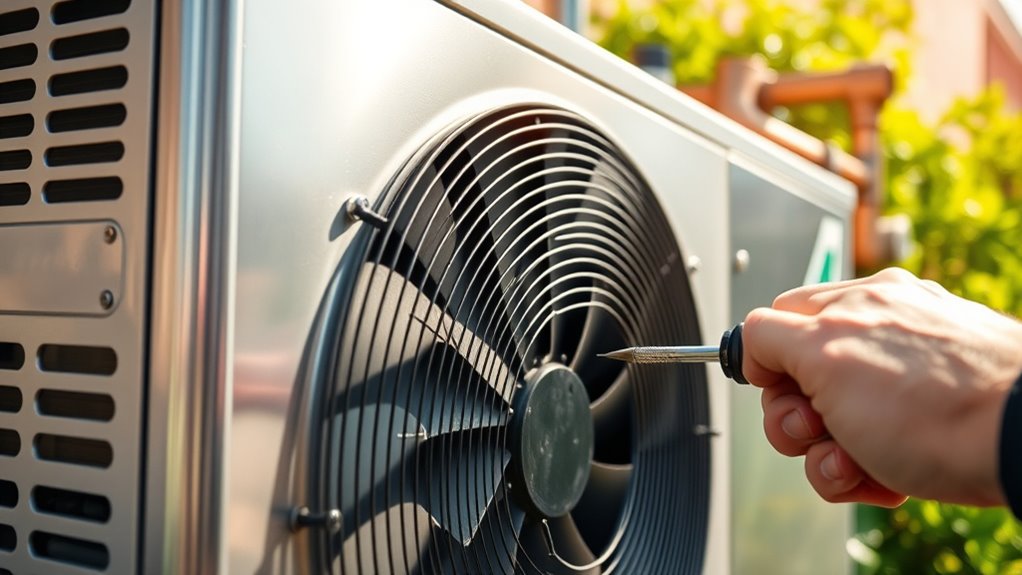
When your heat pump isn’t running smoothly, it’s important to check the fan and compressor for issues. Start by inspecting the fan blades for any damage, debris, or misalignment since these can cause vibrations and noise.
Use vibration analysis tools if you have them to spot imbalance or looseness in the compressor or fan assembly. Keep an eye out for increased noise, which might mean worn bearings or motor problems.
Adding noise insulation around the compressor can help reduce rattles and humming sounds, but first, find the source of the excessive vibration or rattling. This will help prevent further damage.
Make sure all loose parts are secured, and ensure the fan spins freely without any obstructions. If vibrations continue even after inspection, it’s best to call a professional to diagnose internal issues.
Properly inspecting these parts helps prevent noise from escalating and helps your heat pump last longer.
When and How to Clean or Replace Filters and Fans
If your heat pump is suddenly noisier than usual or not heating as well as it used to, it’s a good idea to give your filters and fans a quick check. Sometimes, they get clogged with dirt or dust, which can cause those issues.
Take a look at the fan blades and clean them gently—just enough to remove any buildup, but be careful not to damage them. Also, inspect the filters; if they look worn out or torn, it’s probably time to replace them. Doing this can help your system run smoothly and quietly again!
Signs of Filter Clogging
Clogged filters are a common cause of noisy heat pump operation because they restrict airflow and make your system work harder. When filters get blocked, you might notice lower air quality, more dust around the vents, or your system running all the time.
You may also hear louder noises as the unit struggles to pull air through the clogged filter. Additionally, reduced airflow can cause uneven heating or cooling and make your energy bills go up.
Look out for these signs: air feels weaker from your vents, you hear strange or grinding noises, dust or debris around the vents, higher energy bills, or your system short cycling and running constantly.
Regularly checking and changing your filters helps keep the air clean, keeps your system running efficiently, and prevents annoying noise. If you notice these signs, it’s time to clean or replace your filters.
Cleaning Fan Blades Safely
Regularly cleaning your heat pump’s fan blades is key to keeping it running quietly and efficiently. Dust and debris can build up, causing vibrations, noise, and extra wear over time.
To clean, turn off the power first. Gently wipe the blades with a soft cloth or brush to remove dirt and dust. If the blades become dull or chipped, consider sharpening or replacing them to help reduce vibrations and noise.
Be careful not to bend or damage the blades during cleaning, as this could make noise issues worse. Proper maintenance like this helps ensure smooth operation and extends your system’s lifespan.
| Action | Tips |
|---|---|
| When to clean | Do it quarterly or if noise gets loud |
| Cleaning procedure | Turn off power, gently wipe blades |
| Blade sharpening/replacement | Fix dull or damaged blades quickly |
Replacing Worn Filters
Since worn or dirty filters can significantly reduce your heat pump’s efficiency and cause more noise, it’s essential to inspect and replace them promptly. Regular checks ensure your system runs smoothly and efficiently.
When filters get clogged with dust, debris, or pet hair, airflow is restricted, making the system work harder. This not only increases noise but also decreases overall performance.
To replace filters, start by turning off your heat pump before working on it. Carefully remove the old filter without dislodging other parts.
Make sure to choose a filter that matches the correct size and MERV rating. Insert the new filter securely, ensuring it fits well.
Finally, turn your system back on and check that it’s operating smoothly. Regular filter replacement means cleaner air, less noise, and better energy efficiency.
What Causes Banging or Clunking in Your Heat Pump?
Banging or clunking sounds in your heat pump usually point to mechanical issues or parts that are misaligned and need fixing. These loud noises often come from components like the compressor, fan motor, or expansion valve hitting or shifting around.
Unusual banging sounds may indicate mechanical issues or misaligned parts needing repair.
When parts aren’t secured properly or get worn out, they can cause forceful impacts during operation, making those clunking sounds. This not only disrupts your comfort but can also lower your unit’s energy efficiency over time.
To fix these problems, check for loose bolts, damaged brackets, or misaligned parts. Proper installation and regular maintenance can help reduce noise and improve overall efficiency.
If you notice persistent banging or clunking, it’s best to call a professional. They can accurately diagnose the mechanical issues and make sure your heat pump runs quietly, smoothly, and efficiently—protecting your home comfort and the lifespan of your system.
Preventive Tips to Reduce Noise in Your Heat Pump
Sure! Here’s a more conversational version of your text:
—
Getting your heat pump regularly serviced helps it run quietly and smoothly. It’s also a good idea to make sure it’s installed correctly—this can help prevent any weird vibrations or loud noises.
Don’t forget to clear away any stuff blocking the outdoor unit, like leaves or debris. That way, it can do its job efficiently and quietly. If you follow these simple steps, you’ll notice less noise coming from your heat pump and it can also last longer.
Regular System Maintenance
Performing routine maintenance on your heat pump is one of the best ways to keep noise levels down. Regular checks help prevent components from loosening or wearing out, which can cause rattling or banging noises. It also helps ensure the system runs smoothly and efficiently.
Focus on cleaning or replacing air filters, as clogged filters block airflow and increase noise. Clear debris from around the outdoor unit to improve airflow and reduce strain. Tighten loose bolts and fans to eliminate vibrations.
Inspect ductwork and vents for obstructions or leaks that could make noises louder. Lubricate moving parts to keep everything running quietly. By keeping up with these maintenance tasks, you’ll optimize airflow, cut down on unwanted sounds, and enjoy a quieter heat pump all year round.
Proper Unit Installation
Proper installation of your heat pump is key to keeping noise levels down. Make sure the unit is level and securely anchored to prevent vibrations that could create noise.
Position the indoor unit away from living spaces to improve indoor air quality and avoid disturbing occupants. Proper placement also helps the system run more efficiently without unnecessary strain.
Use correct mounting techniques and consider sound-dampening pads if needed to absorb vibrations. Sealing ductwork tightly can prevent air leaks that cause noise and reduce efficiency.
Avoid placing the unit near walls or objects that can bounce or amplify sound. Proper installation ensures your heat pump operates quietly, saves energy, and maintains good indoor air quality.
Minimize External Obstructions
External obstructions like trees, bushes, or nearby structures can significantly increase noise from your heat pump. These barriers can reflect sound waves and make the unit’s operation more noticeable.
To keep noise levels down, make sure the area around your unit is clear of dense shrubs. Trim or remove tall plants and fencing that might trap or reflect sound.
Be aware of wildlife nearby, as animals can create unexpected noise if they nest close to your unit. Consider installing decoy predators or barriers to keep wildlife away.
Position landscaping features to absorb or deflect sound away from your home. Managing these external obstructions helps reduce noise, creates a quieter environment, and can even help extend your heat pump’s lifespan.
When to Call a Professional for Heat Pump Noise Problems
Sometimes, heat pump noises indicate a problem that needs professional attention. If DIY fixes and noise reduction efforts don’t work, it’s time to call a pro.
When noise persists, it’s time to consult a professional for safety and proper repair.
Loud banging, grinding, or screeching usually mean mechanical parts need expert inspection or repair. Strange vibrations or rattling might be caused by loose components or motor issues that could get worse without proper care.
Loose fan blades or compressor problems can be dangerous and require specialized tools and expertise. Don’t try to fix these yourself if you’re unsure because improper repairs can make the noise worse or damage your system.
If your heat pump keeps making loud or constant noises even after cleaning and basic troubleshooting, calling a professional can help find underlying problems you might miss. Regular maintenance by an HVAC technician keeps noise issues in check and helps your system run smoothly for longer.
Frequently Asked Questions
Can Outdoor Weather Conditions Increase Heat Pump Noise Levels?
Yes, outdoor weather conditions can increase heat pump noise levels. When it gets colder outside, the insulation around your unit might not block noise as well, making it sound louder.
Wind can also carry sound waves, which can make the noise seem even louder. To help reduce this, make sure you have proper outdoor insulation and consider placing noise-absorbing barriers around the unit.
Keeping these factors in check can really help cut down on noise, especially during extreme weather.
How Does Age Affect Noise Production in Heat Pumps?
As your heat pump gets older, you might notice it getting noisier. This is often due to wear and tear over time.
Parts like fans, compressors, and mounts can become loose or start to break down, which can lead to more vibrations and rattling sounds.
Regular maintenance can help keep things quieter. Tightening parts and replacing worn components makes a big difference.
Understanding that age affects noise levels can help you catch issues early and plan for repairs.
This way, your system stays quieter and runs more efficiently for longer.
Are Noise Issues Different Between Ducted and Ductless Models?
Yes, noise issues can differ between ducted and ductless models. Ducted units often produce more vibration noise if proper vibration isolation isn’t in place.
Ductless models might generate more fan noise because of their compact design. Checking for loose components and making sure vibration isolation mounts are secure can help reduce these noises.
Regular maintenance is key. It can cut down on both vibration and fan noise, helping your system run more quietly and efficiently.
What Role Does Refrigerant Level Play in Noise Generation?
Think of refrigerant level as the heartbeat of your heat pump. When it’s off, noise can ripple through like echoes in a canyon.
Low refrigerant due to leaks causes the compressor to work harder, increasing vibration and resulting in rattles or buzzing.
This heightened compressor vibration resonates throughout the unit, amplifying noise levels.
Ensuring proper refrigerant charge keeps the system smooth, quiet, and humming along harmoniously.
Can Improper Installation Cause Excessive Noise in Heat Pumps?
Yes, improper installation can cause excessive noise in heat pumps. You might notice vibrations or rattling if mounts aren’t secure. Sound can also amplify if vibration reduction isn’t included.
To fix this, make sure the heat pump is installed correctly. You might also want to add soundproofing techniques like insulating pads or barriers to lessen noise transmission.
Vibration reduction is especially helpful. It prevents metal-on-metal contact, which can make the noise worse.
Conclusion
So, next time your heat pump starts blasting noises like a rock concert, remember—you’re the detective now. Maybe tighten a screw, clear some ice, or simply accept that your quiet oasis has become your home’s new drumline.
And if all else fails, calling in a pro might just save your sanity and your relationship with your neighbors. After all, peace and quiet aren’t just for air conditioners; they’re what you deserve.
Troubleshooting noisy air water heat pumps can keep your home peaceful and save you money.