Are Air Water Heat Pumps Any Good?
Many homeowners struggle with keeping energy costs low while staying warm during chilly months. If that sounds familiar, you’re not alone. Finding an efficient, eco-friendly heating solution can feel overwhelming, especially with so many options out there.
Air water heat pumps are a smart, eco-friendly way to heat your home efficiently, even in colder climates, when properly installed and maintained. They work by transferring heat from outdoor air to your water supply, offering lower energy bills and reducing your carbon footprint.
While their performance can drop in very cold weather and installation may be complex, advancements now allow better cold-weather operation. To learn more about their benefits and challenges, explore if they’re the right fit.
Key Takeaways
- They offer high efficiency and are eco-friendly, helping to lower energy bills and reduce your carbon footprint.
- Modern models work well even in cold climates, providing reliable heating below freezing temperatures.
- The initial cost is higher, but you’ll save money in the long run thanks to lower operating expenses and available financial incentives.
- Proper installation and regular maintenance are key to getting the best performance and making your system last longer.
- In really cold weather, their performance can dip, so you might need a backup heating source for those extreme days.
What Are Air Water Heat Pumps and How Do They Work?
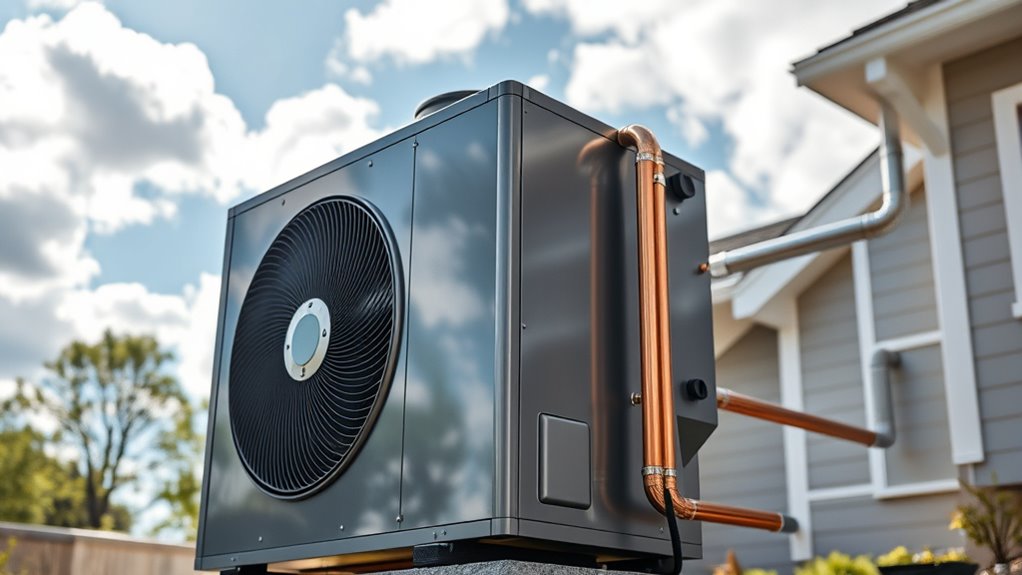
Air water heat pumps are efficient systems that transfer heat from the outdoor air to your home’s water supply. They work by extracting heat from ambient air, even when it’s cold, and using a refrigerant cycle to warm your water.
The compressor and condenser inside the unit move heat effectively, making the system energy-efficient and cost-effective. One major advantage is that they operate quietly, so they won’t disturb your daily life.
Since they gather heat from the air, they need minimal electrical energy to run. This helps keep your energy bills lower. These systems are a smart choice if you want sustainable, space-saving water heating, especially in milder climates.
Their simple operation and quiet performance make them popular among homeowners looking to reduce their environmental impact without sacrificing comfort.
Do Air Water Heat Pumps Perform Well in Cold Climates?
Wondering if air water heat pumps work effectively in cold climates? The good news is that many modern models have improved climate adaptability, allowing them to operate efficiently even when temperatures drop below freezing. They use advanced technology to extract heat from the cold outdoor air, so you can rely on them in chilly weather.
However, performance can vary based on the unit’s design and how cold it gets. Some units may need additional heating sources during especially cold snaps. Noise levels are generally low, making these units suitable for residential areas without disturbing neighbors.
You won’t have to worry about loud operation disrupting your peace. Overall, air water heat pumps are becoming more dependable in cold climates, offering efficient heating with quiet operation. Just make sure you choose a model designed for cold weather to get the best performance and climate adaptability.
How Much Do Air Water Heat Pumps Cost, and Are They Worth It?
Thinking about how much an air water heat pump costs is pretty important because, let’s face it, the upfront price can be a bit steep. But at the same time, you’ll want to consider the long-term savings on energy bills that these systems can offer. Doing a simple cost-benefit comparison can really help you figure out if it’s worth making the switch for your home.
Initial Investment Expenses
The initial investment for air water heat pumps can vary quite a bit depending on factors like size, efficiency, and installation needs. A detailed cost analysis shows that upfront costs usually range from $7,000 to $15,000, including both equipment and installation.
While those prices might seem high at first, market trends show costs decreasing as technology improves and demand increases. This reduction is making air water heat pumps more affordable for homeowners. Keep in mind that installation complexity, such as adapting existing systems or dealing with space constraints, can also affect the total cost.
Although the initial investment is significant, understanding these factors helps you determine whether long-term benefits justify the upfront expense. Overall, market trends suggest air water heat pumps are becoming a more cost-effective heating solution for modern homes.
Long-Term Energy Savings
Air water heat pumps can significantly cut your energy costs over time by providing efficient heating and cooling. They help you save money while keeping your home comfortable and improving indoor air quality.
Here’s how they do it:
- They have high efficiency at converting ambient air into heating or cooling, which lowers your energy bills.
- You’ll rely less on traditional heating systems, which means less maintenance and fewer replacement costs.
- Many units include water filtration that removes pollutants, leading to better indoor air quality.
- Improved water filtration ensures clean water usage, reducing the need for extra water treatment.
Cost-Benefit Analysis
While the initial investment in an air water heat pump can be higher than traditional heating systems, many homeowners find that the long-term savings on energy bills quickly offset the upfront costs.
Plus, energy rebates offered by governments or utilities can significantly reduce the initial price. Technology advancements have made these systems more efficient and affordable over time, boosting their cost-effectiveness.
Although the upfront cost might seem steep, you benefit from lower operational expenses and potential incentives. When weighing the investment, consider both the immediate costs and long-term benefits.
What Are the Environmental Benefits of Using Air Water Heat Pumps?
Using air water heat pumps offers big environmental benefits by cutting down reliance on fossil fuels and lowering greenhouse gas emissions. They use the air around us, a renewable energy source, to produce heating and hot water efficiently.
Here are some key advantages:
- Lower Carbon Footprint: They emit less compared to traditional heating systems.
- Solar Integration: You can connect them with solar panels to boost your use of renewable energy.
- Energy Efficiency: With high efficiency, they use less electricity, which helps reduce your environmental impact.
- Government Incentives: Many areas offer rebates and tax credits, making eco-friendly choices more affordable.
How Do Air Water Heat Pumps Compare to Other Heating Systems?
When you’re looking at air water heat pumps compared to other heating systems, you’ll see they have their own pros and cons when it comes to efficiency, installation costs, and how eco-friendly they are. Some systems might be more efficient and save you energy in the long run, but they could also have higher initial costs to install. On the other hand, some alternatives might be cheaper to set up upfront but may not be as kind to the environment. Getting a clear picture of these differences can really help you pick the best heating option that fits your needs and your budget.
Efficiency Levels Compared
Air water heat pumps are known for their impressive efficiency compared to traditional heating systems. They typically achieve higher energy efficiency ratings, so you’ll use less energy to stay warm.
Unlike boilers or electric heaters, they draw heat from the outside air, even during winter. When it comes to noise, heat pumps usually run quietly, so they won’t disturb your home.
Here are some key points:
- Energy efficiency: They can reach efficiencies of 300-400% under ideal conditions.
- Operation cost: You’ll spend less on energy because they use less power.
- System noise: They operate quietly, often quieter than conventional systems.
- Performance in cold weather: Modern models still provide efficient heating even at low temperatures.
Installation Costs Variance
The installation costs of air water heat pumps can vary widely compared to other heating systems. Factors like system complexity, site conditions, and existing infrastructure all play a role.
Cost differences often depend on the size of the home, the need for extra components, and how easy it is to connect to current systems.
Installation considerations such as roof space, ground setup for outdoor units, and electrical work can all impact the final cost.
Generally, air water heat pumps tend to have higher initial expenses than traditional boilers or electric heaters. However, this can be balanced out by lower running costs over time.
Understanding these factors helps you decide if the upfront investment fits your budget and heating needs. It also makes choosing energy-efficient options easier as the landscape evolves.
Environmental Impact Difference
While installation costs are a part of the equation, understanding the environmental impacts of different heating options is crucial for making eco-friendly choices.
Air water heat pumps usually have a smaller carbon footprint than fossil fuel systems because they run on electricity, which can be renewable.
Compared to traditional gas or oil heaters, they emit significantly fewer greenhouse gases.
When you think about refrigerants, modern heat pumps use eco-friendly types with low global warming potential.
Noise levels matter too—these systems tend to be quieter than geothermal or combustion-based options.
Here’s what to keep in mind:
- The type of refrigerant impacts overall environmental impact.
- They produce lower greenhouse gas emissions than fossil fuels.
- They help reduce noise pollution.
- Relying on renewable energy sources makes them more eco-friendly.
Can Air Water Heat Pumps Provide Hot Water and Space Heating?
Many air water heat pumps are designed to do more than just heat your home; they can also provide hot water for daily needs. These systems are versatile, combining space heating and hot water production in a single unit.
You’ll find that the efficiency ratings of air water heat pumps are quite high, making them an energy-efficient choice. While the initial installation might be more expensive than traditional systems, lower operational costs balance this out over time.
Most models can deliver reliable hot water consistently while keeping indoor temperatures comfortable. Some advanced units even let you control both heating and hot water settings separately, which adds extra convenience.
What Factors Impact the Performance of Air Water Heat Pumps?
Your air water heat pump’s performance really depends on a few key things, like the outside temperature and whether the system is properly sized. When it gets colder outside, the efficiency of the heat pump can drop a bit because it has to work harder to pull heat from the air.
And if the system isn’t the right size for your space, it might struggle to keep up with your heating needs, which can lead to higher energy use and less comfort. So, paying attention to these factors — making sure you’ve got the right size and understanding how weather impacts performance — can help you get the most out of your heat pump and keep everything running smoothly.
Ambient Outside Temperature
How does outdoor temperature influence the efficiency of air water heat pumps? As temperatures drop, the heat pump has to work harder to extract heat from the cold air, which can reduce indoor comfort and increase noise levels due to higher compressor activity. This efficiency decline is especially noticeable in extreme cold.
To understand better, consider these factors:
- Reduced heat extraction: Colder air contains less heat, requiring more energy.
- Increased energy consumption: The system runs longer, increasing power use.
- Potential frost build-up: Icing on coils diminishes heat transfer.
- Noise level rise: Extra effort can cause louder operation, impacting indoor comfort.
Staying aware of outdoor temperatures helps you manage expectations and optimize system performance.
Proper System Sizing
Getting the right size ensures the heat pump can handle your requirements without overworking or underperforming. Compatibility matters, too; a poorly matched system might be noisy, causing discomfort and disturbances.
A properly sized unit runs smoothly, while one that’s too big or small can lead to frequent cycling, more wear and tear, and noise issues. For the best results, rely on professional assessments that consider your home’s insulation, size, and climate.
What Are the Common Challenges and Limitations?
Despite their advantages, air water heat pumps face several common challenges and limitations. First, installation can be tricky, especially if space is limited or structural changes are needed. Proper placement is crucial to ensure efficiency and avoid problems.
Next, noise levels can be an issue. The outdoor units can make sounds that might disturb neighbors or people nearby. Performance can also dip during extremely cold weather, which reduces heating efficiency and might require backup systems.
Additionally, upfront costs for buying and installing these systems are often higher than traditional heating options. However, these costs can be offset over time through energy savings.
These limitations are important to consider when choosing an air water heat pump. While they offer many benefits, understanding the challenges helps you make smart decisions about installation, operation, and maintenance for reliable, efficient use.
How Do You Maintain and Optimize Your Air Water Heat Pump?
Maintaining and enhancing your air water heat pump is key to keeping it running efficiently and lasting longer. Regular checks like cleaning filters and inspecting coils help maintain top energy performance.
Keep an eye on the outdoor unit for debris or obstructions that could block airflow and make the system work harder. Scheduling professional maintenance once a year can spot issues early and prevent costly repairs.
Think about system upgrades, like installing a smart thermostat or adjusting settings for different seasons. These changes help boost energy efficiency by giving you more precise control over heating and cooling, which cuts down on energy use.
Also, keep track of your energy bills and how well the system is working to catch any inefficiencies early. Proper maintenance and smart upgrades keep your heat pump running at its best, saving you money and prolonging its lifespan.
All of this helps keep your home comfortable while reducing overall energy costs.
Are Air Water Heat Pumps the Right Choice for Your Home?
Choosing the right heating and cooling system depends on your home’s specific needs. Air water heat pumps can be a great option for many homeowners. They offer excellent energy efficiency, which can help lower your utility bills, especially in moderate climates.
Before making a decision, consider a few factors. First, think about your climate. These pumps work best where winters aren’t extremely cold. Second, check the noise levels. Modern models run quietly, so you won’t be bothered by operational sounds.
Also, look at installation costs. The upfront expense may be higher, but the savings over time can make it worthwhile. Lastly, consider maintenance needs. Regular upkeep ensures the system stays efficient and lasts longer.
If your home and environment meet these criteria, an air water heat pump might be a smart choice. They’re energy-efficient, eco-friendly, and maintain a comfortable indoor climate. Their quiet operation adds to their appeal.
Ultimately, weighing your climate, budget, and comfort preferences will help you decide if this system is right for you.
Frequently Asked Questions
How Long Do Air Water Heat Pumps Typically Last?
Air water heat pumps usually last around 10 to 15 years if you take good care of them. Regular maintenance can really help extend their lifespan.
Make sure to clean the unit often, check for leaks, and get it serviced once a year. Proper upkeep keeps your system running efficiently and lasts longer.
When you compare costs, remember that the initial price might be higher, but they save you money on energy bills over time.
Taking care of your heat pump ensures you get the best performance and the longest possible life out of it.
Can Air Water Heat Pumps Be Used in Commercial Buildings?
Yes, air water heat pumps can be a game-changer in commercial applications. They harness the air’s whispering warmth, turning it into reliable heat and hot water, much like capturing sunlight in a jar.
With their focus on energy efficiency, they lower operating costs and reduce your carbon footprint. Whether you’re dealing with office buildings or retail spaces, these pumps offer a smart, sustainable solution that can grow with your business needs.
Is Any Special Insulation Needed for Optimal Performance?
Yes, some insulation helps optimize your air water heat pump’s performance. Good insulation reduces heat loss, so your system works more efficiently and saves energy.
Focus on insulating walls, ceilings, and pipes to minimize efficiency issues that could lead to higher running costs. Proper insulation makes sure your heat pump runs at its best.
This ensures consistent comfort and can significantly lower your energy bills over time.
Are There Rebates or Incentives Available for Installation?
Yes, you can often benefit from government incentives when installing air water heat pumps. This can turn a smart upgrade into a cost-effective choice.
These rebates help improve your energy savings, making the switch more affordable. Incentive programs vary depending on where you live, so it’s a good idea to check with local energy departments or utility companies to see what’s available.
Taking advantage of these government incentives can help you enjoy the benefits of efficient heating while keeping your expenses lower.
How Noisy Are Air Water Heat Pumps During Operation?
Air water heat pumps are pretty quiet during operation, with noise levels similar to a refrigerator or a quiet conversation.
That said, some models can be louder, especially when starting up or working hard. You can reduce noise by installing sound barriers or placing the unit away from your living areas.
Regular maintenance and choosing a sound-reduced model can help ensure the unit runs smoothly without disturbing your peace.
Conclusion
Choosing an air water heat pump is like planting a resilient tree. It’s an eco-friendly investment that can thrive in various climates, offering warmth while reducing your carbon footprint.
While it might face storms during bitter winters or require proper upkeep, its benefits often outweigh the challenges.
With patience and care, this green option can grow into a dependable source of comfort, turning your home into a sanctuary rooted firmly in sustainable living.
Overall, air water heat pumps are a good choice for those looking for an energy-efficient and environmentally friendly heating solution.