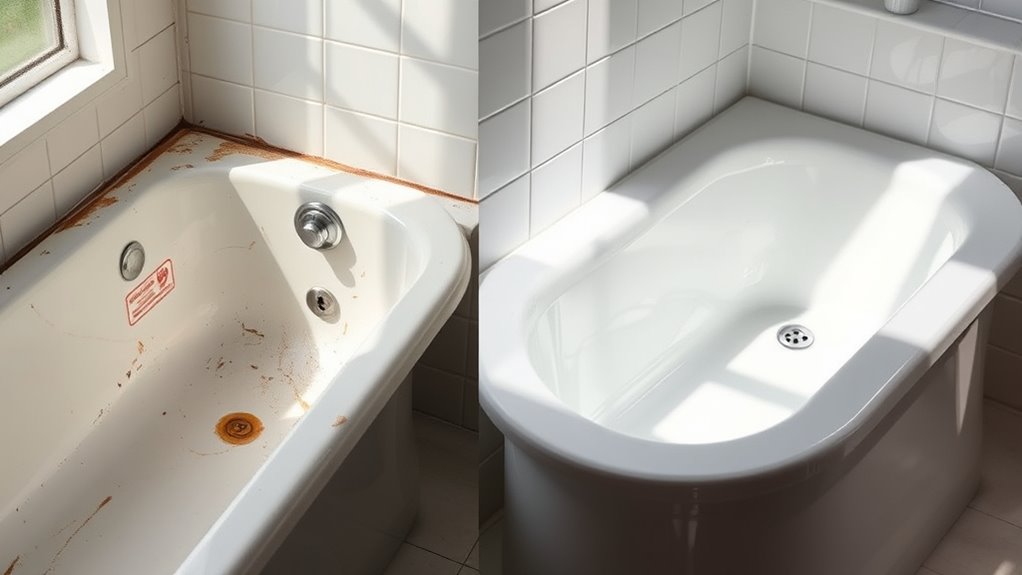
How to Decide Whether Reglazing or Replacing Your Bathtub Is Better
Thinking about upgrading your bathroom but feeling overwhelmed about whether to reglaze or replace your bathtub? You’re not alone—many homeowners struggle with this decision. It’s a common challenge as you want a fresh look without breaking the bank or causing too much hassle.
To decide if reglazing or replacing your bathtub is better, assess its condition—chips, cracks, or structural issues call for replacement, while surface wear may only need reglazing.
Consider your budget, timeline, and long-term goals. Re-glazing is quicker and cheaper but lasts about 5-10 years, whereas replacement offers 15-30+ years of durability.
Think about safety features and environmental impact too. Keep exploring to find the best choice for your bathroom upgrade.
Key Takeaways
- Assess the bathtub’s structural integrity. If only the surface is worn, reglazing could be enough. But if there are cracks or significant damage, replacement might be the better option.
- Think about your budget and how quickly you need the project done. Reglazing is usually faster and cheaper, making it ideal for minor updates.
- Consider your long-term needs. Replacing the bathtub can give you a more durable, modern feature that lasts longer.
- Keep in mind the environmental impact. Reglazing produces less waste and uses fewer resources compared to replacing the entire tub.
- Finally, evaluate your skills or the need to hire professionals. DIY or professional reglazing requires some expertise, while a full replacement tends to be more complex.
Understanding Your Bathtub Options: Reglazing or Replacement?
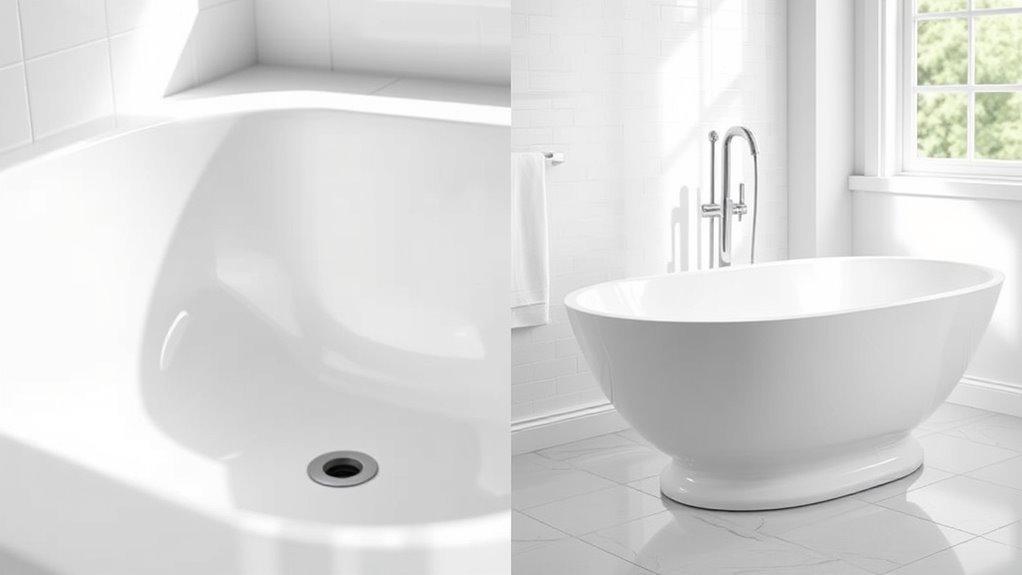
Are you unsure whether to reglaze or replace your bathtub? Understanding your options can help you pick the best solution.
Reglazing keeps the vintage charm of your tub, giving it a fresh, glossy look without losing its character. If your tub is structurally sound but just looks worn or outdated, a reglaze offers a quick, cost-effective upgrade.
Reglazing restores vintage charm with a glossy finish, ideal for tubs that are worn but still sound.
Replacing the tub lets you opt for a modern look with new materials, styles, and features that match your current taste and needs. It’s also a good chance to fix any structural issues or improve safety.
Think about whether you want to maintain that vintage feel or go for a complete overhaul with modern features. Both choices have their perks, but knowing your goals and the condition of your tub will help you decide what fits your bathroom renovation best.
How to Tell If Your Bathtub Needs Reglazing or Full Replacement
When deciding whether your bathtub needs a simple reglazing or a full replacement, inspecting its condition can give you clear answers. Check for cracks, chips, or extensive staining that might not respond well to reglazing.
Think about how the bathtub’s textures have changed. A rough or uneven surface might require replacement for safety and aesthetic reasons. Also, evaluate water drainage—if water pools or drains slowly despite cleaning, it could signal underlying plumbing issues or serious buildup beneath the surface.
Furthermore, look at the overall structure. Sagging, warping, or weakened areas indicate it’s time for replacement. Keeping these factors in mind helps you determine if a reglaze will restore your bathtub’s look and function or if a full replacement is necessary for long-term durability and safety.
What Does It Cost to Reglaze or Replace a Bathtub?
Understanding the costs involved in reglazing or replacing your bathtub can help you make an informed decision within your budget. Reglazing usually costs between $300 and $600, depending on the style of your bathtub and how extensive the damage is.
Replacing a bathtub costs more, typically ranging from $1,000 to $4,000. The final price depends on the materials used and how complex the installation is.
Here’s a quick comparison:
| Service | Average Cost | Key Factors |
|---|---|---|
| Bathtub Reglazing | $300 – $600 | Techniques, styles |
| Basic Bathtub Replacement | $1,000 – $2,500 | Material, labor costs |
| High-End Replacement | $3,000 – $4,000 | Designer styles, custom fittings |
Different tub styles like cast iron, acrylic, or fiberglass also influence the cost and your choices.
Don’t forget about additional expenses like removal and repairs, which could add to the total cost.
Choosing the best option depends on your budget, style preferences, and the condition of your current tub.
How Long Will Each Bathroom Renovation Last? Durability Compared
Deciding between reglazing and replacing your bathtub depends on how long you want the renovation to last, since each option has different durability levels.
In the past, people preferred long-lasting replacements, but recent advances in reglazing have extended its lifespan. Designers now favor sleek, durable finishes that mimic new materials, which influences how people see durability.
While reglazing generally lasts 5 to 10 years with proper maintenance, a full replacement can last 15 to 30 years or more. Factors that affect how long they last include material quality, care, usage, installation, and environmental conditions like humidity or cleaning products.
Understanding these factors can help you decide between a temporary cosmetic fix and a long-term solution. Your choice should match how long you want your bathroom to serve your needs, considering both past trends and recent design innovations focused on durability.
Which Solution Fits Your Schedule: Reglazing or Replacing?
Are you trying to fit a bathroom renovation into a busy schedule? Reglazing is a quick fix, often done in a day, making it perfect if you need minimal disruption. It provides an instant cosmetic improvement and boosts your bathroom’s look without long waits. Replacing a bathtub, however, takes longer—often several days or more—requiring demolition, installation, and curing time. If time is tight, reglazing helps you update your space faster.
Here’s how it stacks up:
| Reglazing | Replacing |
|---|---|
| Quick project | Longer process |
| Minimal disruption | Major renovation |
| Instant aesthetic boost | Complete style change |
Choosing the solution that fits your schedule depends on what’s more important to you. If rapid cosmetic enhancement and minimal downtime matter most, reglazing’s your best bet. But if you want a complete upgrade and time isn’t an issue, replacing works better.
Will Your Bathtub Look How You Want? Finishing and Style Choices
Your choices in color and finish really have the power to change the look of your bathtub. It’s a good idea to pick options that match your personal style and make your bathroom feel like your own space. Think about how different finishes will work with the overall design of your bathroom—will they complement your fixtures and tiles?
Also, consider whether the colors you choose fit with your existing decor. Picking the right shades can help create a cohesive look, making everything come together nicely. Taking the time to make sure everything is compatible means you’ll love the result and avoid surprises down the line.
Color and Finish Options
Choosing the right color and finish for your bathtub can really change the look of your bathroom. Your choices in color and style can make your space feel modern, classic, or completely unique.
If you want a sleek, contemporary vibe, go for glossy finishes in neutral or bold hues. For a softer, vintage look, matte or eggshell finishes in pastel shades work well.
Think about these factors when deciding:
- Bright white for a clean, timeless look
- Bold jewel tones for a statement piece
- Soft matte finishes for a subtle, muted effect
- Custom colors to match your decor or personality
Matching your color and finish choices to your style guarantees your bathtub fits perfectly in your space.
Design Compatibility
Ensuring your bathtub matches your overall design aesthetic requires careful thought about style and finishing details. Consider color coordination to make sure the tub complements your bathroom palette, whether you want a bold contrast or a subtle match.
Texture contrast also matters. Smooth, glossy finishes give a modern vibe, while matte or textured surfaces add character. If you’re thinking about reglazing, make sure the finish aligns with your style since it’s often customizable.
Replacing the tub gives you more flexibility with design choices. But if the existing shape fits your vision, refinishing can update its look while keeping the style intact. Ultimately, your decision depends on whether your current or new bathtub will blend seamlessly with your bathroom’s overall theme.
Is Repairing or Maintaining Your Bathtub Easy With Reglazing or Replacement?
While both reglazing and replacement aim to restore your bathtub, they differ quite a bit in how easy they are to maintain. Reglazing is a faster, less invasive option, making repairs simple. Since it coats the existing surface, you can usually handle minor touch-ups with little effort.
Replacement involves removing the old tub, which can be more complex and take more time. Gaining access to plumbing and ensuring the new tub fits properly requires more planning and effort.
Key factors affecting ease of maintenance include the durability of the bathtub’s exterior surface and how easily it can be cleaned. Accessibility of plumbing connections during installation or repairs also plays a big role.
Another thing to consider is how future repairs might be easier or harder with a new tub. Finally, reglazing may require surface refinishing or touch-ups later on, which could add to the maintenance needed.
Is Bathtub Reglazing or Replacement Eco-Friendly? Environmental Impact Compared
When you’re trying to decide between reglazing and replacing your bathtub, thinking about the environment can help guide your choice. Replacing the bathtub usually means a lot of waste—think about the old tub, packaging, and all the new materials needed—which isn’t great for the planet. Plus, it uses more energy to tear out and install a new one.
On the other hand, reglazing is a more eco-friendly option because it uses fewer materials and generates less waste. It also involves fewer pollutants since it doesn’t require as much manufacturing or disposal. So, if you’re looking to be more environmentally conscious, reglazing could be the better choice. Knowing these points can help you make an option that matches your values and supports a greener lifestyle.
Material Sustainability Concerns
Deciding whether to reglaze or replace your bathtub depends on the environmental impact of each choice. Reglazing usually uses fewer resources, conserving energy and reducing waste, which makes it more sustainable in the short term.
However, the new finish may not last as long as a full replacement. This can affect long-term material sustainability because you’ll need to redo it sooner.
Replacing the tub involves extracting and manufacturing new materials, which impacts energy use. But it often results in a longer-lasting fixture that reduces the need for future replacements.
Think about these factors:
- Reglazing minimizes resource use and supports energy conservation.
- Replacement involves more material extraction and manufacturing.
- Longer-lasting tubs improve material longevity and reduce frequent replacements.
- Eco-friendly choices depend on the durability and lifespan of the materials used.
Pick the option that best balances sustainability and functionality for your situation.
Waste Generation in Replacement
Replacing a bathtub generates significant waste, impacting its overall eco-friendliness. Disposing of old tubs adds to landfill overflow and poses reuse challenges, as many materials don’t easily break down or get recycled.
While replacing might update your bathroom, it often results in more waste than reglazing. Efforts to reduce waste like recycling metals or plastics from the old tub are limited by local recycling capabilities.
This makes waste reduction difficult, as the breakdown and repurposing of bathtub materials are often logistically complex. As a result, the environmental impact of replacement tends to be higher due to the volume of waste produced.
If minimizing waste is a priority for you, reglazing offers a more sustainable alternative by avoiding the need to discard and replace the entire fixture.
Energy Use and Pollutants
Bathtub reglazing generally uses less energy than replacing the entire unit because it’s only a surface treatment instead of manufacturing a new fixture. This helps reduce energy consumption and lowers the environmental impact.
Reglazing also cuts down on pollutant emissions linked to making, transporting, and installing a new tub. Plus, it helps prevent waste and avoid raw material extraction, making it more eco-friendly.
Since reglazing requires less energy, it contributes to better energy efficiency in your home. By choosing reglazing over replacement, you’re helping to cut down greenhouse gas emissions from manufacturing and transport.
- Less resource-intensive manufacturing process
- Reduced transportation emissions
- Shorter installation time
- Lower overall energy consumption
Should You Do It Yourself or Hire a Pro to Reglaze or Replace?
While tackling bathtub reglazing or replacement yourself might seem like a good way to save money, it’s important to honestly assess your skills and the project’s difficulty.
DIY repair can cut costs upfront, but it needs the right tools, experience, and patience. Reglazing involves tricky fumes and precise application, so hiring a professional is often the safer choice.
If you’re new to this, trying a DIY fix might lead to uneven results, leaks, or damage that will cost more to repair later. On the other hand, hiring a pro ensures the job is done right with quality materials and proper techniques.
Professionals usually offer warranties, giving you peace of mind. If you have no experience, it’s probably better to leave this project to experts.
Ultimately, weigh your skill level, the work’s complexity, and the long-term costs before deciding whether to do it yourself or hire a pro.
Your Step-by-Step Guide to Choosing the Best Bathroom Fix
When you’re trying to pick the best bathroom fix, the first thing to do is take a good look at your tub to see what kind of damage or wear it has. This will help you figure out what kind of repairs or updates are really needed.
Next up, think about your budget. Some fixes are more affordable than others, and you’ll also want to consider how much time and effort you’ll need to put into maintenance down the road. It’s all about finding that sweet spot between cost and convenience.
And lastly, consider how long you want the fix to last. Do you want something quick and easy, or are you okay with investing a bit more time and money for a more durable solution? By keeping these things in mind, you’ll be able to choose the best bathroom fix that fits your needs perfectly.
Assessing Damage and Wear
Before deciding whether to reglaze or replace your bathtub, take a close look at its condition. Check for cracks, chips, or deep stains that might affect how it looks.
Examine the surface for excessive wear, discoloration, or areas where the glaze has worn away. Consider if the tub’s structure is still solid or if rust and corrosion are a concern.
Remember, the amount of damage influences the repair method and how complicated the installation might be. To assess carefully, look at:
- How severe the surface damage is, like cracks, chips, or stains
- Whether the structure is intact and if rust is present
- The overall appearance and whether the surface feels smooth
- Any issues with plumbing or support beneath the tub
Doing a thorough evaluation helps you choose the most practical and durable solution.
Cost and Budget Considerations
Once you’ve assessed the damage and decided whether reglazing or replacing is best, it’s time to consider the costs and how they fit into your budget. Reglazing is usually more affordable upfront, making it a good option if you’re on a tight budget or need a quick fix.
Replacing your bathtub costs more, especially if you hire a professional. But it can offer a better look and work well with newer, more durable materials. Think about your long-term goals and how much you care about aesthetics.
If money is tight, reglazing can refresh your tub’s appearance without the cost of removal. If you want a modern, stylish look, investing in a new tub might be worth the higher price.
Longevity and Maintenance
When choosing between reglazing and replacing your bathtub, considering longevity and maintenance is key to making a lasting choice. Reglazed tubs usually offer decent durability, but their finish may fade over time because of limited UV resistance.
Replacing your tub with a new one can improve slip resistance and give you a longer lifespan, especially if you opt for high-quality materials.
Reglazed surfaces might need frequent touch-ups since the finish can fade more quickly with exposure to UV light. Replacement tubs often have better slip resistance, which helps reduce fall risks.
Proper maintenance can extend the life of either option. Avoiding abrasive cleaners helps preserve the finish and overall condition.
Durability varies: reglazing generally lasts 5–10 years, while a new tub can last more than 20 years with proper care.
Frequently Asked Questions
How Do I Determine if My Bathtub Is Beyond Repair?
You can tell if your bathtub is beyond repair by looking for surface cracks that don’t get worse over time and checking if drain problems keep coming back despite fixes.
If you see lots of cracks or your drain issues are frequent and severe, it probably means the tub has significant damage.
In these cases, replacing the tub is usually the best choice because reglazing won’t fix structural or drain problems effectively.
What Are the Safety Considerations During Reglazing or Replacement?
During reglazing or replacement, keep the area slip hazard-free and ensure it’s well-ventilated. This helps prevent accidents and reduces exposure to fumes.
Wear gloves, masks, and eye protection to avoid chemical exposure from harmful substances and fumes. These safety measures are essential for your protection.
Clear clutter from the workspace to prevent slips or trips. Make sure to follow all manufacturer instructions carefully to do the job safely.
Turning on exhaust fans or opening windows helps ventilate fumes. Good airflow is key to keeping the area safe and comfortable.
Always use proper tools and wear the right safety gear. This keeps you protected from potential accidents or chemical risks during the process.
Can Reglazing Fix All Types of Bathtub Damage?
Reglazing can improve your bathtub’s appearance and surface durability, but it can’t fix all types of damage. Surface chips, cracks, or significant structural issues need more extensive repairs or replacement.
While bathtub paint and reglazing work well to restore the surface finish, they won’t address deep core damages. It’s important to evaluate how severe your damage is before deciding on a fix.
If the damage is deep or structural, reglazing might not be enough. In such cases, a professional can help you determine if a repair method or full replacement is the better option.
How Can I Match a New Bathtub Style With My Existing Bathroom Decor?
To match a new bathtub style with your existing bathroom decor, focus on color coordination and fixture compatibility.
Pick a tub color that complements your walls and floors, creating a seamless look. Choose fixtures that either match or contrast tastefully.
For a modern vibe, go with classic chrome fixtures. If your style is softer and warmer, brushed nickel might be the better choice.
Making sure these elements work together helps your bathroom look cohesive and inviting.
What Warranties or Guarantees Are Available for Reglazing and Replacing?
You can get warranties or guarantees for both reglazing and replacing your bathtub, but they vary. Reglazing usually offers a one- to three-year warranty that focuses on surface durability.
Replacing often comes with longer warranties on the structural components. When comparing costs, think about how long each option lasts.
Reglazing is cheaper upfront but might need re-coating sooner. On the other hand, replacing has a higher initial cost but generally offers longer-lasting results.
Conclusion
Choosing between reglazing and replacing your bathtub is like planting a new seed versus tending an old tree. Reglazing is quick and budget-friendly, making it ideal for refreshing your tub’s look without a big investment.
Replacing, on the other hand, is a full overhaul that offers long-term durability and a completely new style. Think about what fits your needs, budget, and timeline.
Whichever option you pick, you’re enhancing your bathroom’s beauty and function. This decision helps your home flourish and creates a space you love.
If you’re aiming for a quick update, reglazing might be the way to go. But for lasting change, replacing your bathtub is the smarter choice.