How to Identify All Types of Shower Valves
Struggling to figure out what kind of shower valve you have? You’re not alone—many people find this confusing, especially when dealing with repairs or upgrades. Knowing your shower valve type can save you time, money, and frustration.
To identify all types of shower valves, start by checking the handle style. The single handle usually indicates a thermostatic or pressure-balanced valve, while two handles often point to traditional compression valves.
Look at the valve’s placement—whether it’s exposed or hidden behind the wall—and examine any labels or markings for clues.
Observe the control features like digital displays or switchers, which can also help you determine the type.
Noticing these details helps pinpoint the exact valve you have.
If you want to learn more about these features and how to troubleshoot, keep exploring—you’ll find useful tips ahead.
Key Takeaways
- Examine the handle shape and configuration, like single lever or dual knobs, to tell apart thermostatic, pressure-balance, and compression valves.
- Check if the valve is visible or hidden behind the wall, which can give clues about its type and how it’s installed.
- Look for digital displays, temperature indicators, or safety features that suggest a modern thermostatic or digital valve.
- Identify diverter controls such as small levers or switches that control multiple outlets like the showerhead and tub spout.
- Inspect the materials and construction, like ceramic discs or washers, to see if the valve is newer, more durable, or older.
How Do Shower Valves Work and What Are Their Main Parts?
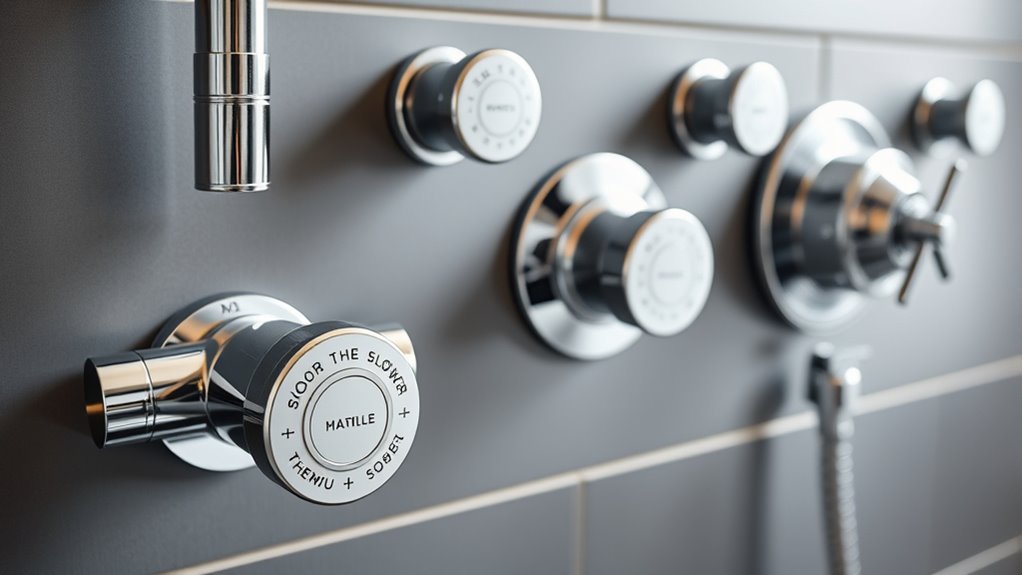
Understanding how shower valves work starts with knowing their main parts. Over time, shower valves have evolved from simple mechanisms to more advanced, user-friendly designs.
At their core, a shower valve controls both water flow and temperature by mixing hot and cold water to your preferred setting. It typically has three main parts: the valve body, the control handle, and the cartridge or disc.
A shower valve mixes hot and cold water to control flow and temperature through its valve body, handle, and cartridge or disc.
When you turn the handle, it adjusts the cartridge, which manages the water flow and temperature. Installation methods vary depending on the type of valve—it can be wall-mounted or concealed—and need to be fitted carefully to prevent leaks.
Newer designs often include ceramic discs, which make the valve more durable and reliable. This is a big upgrade from older valves that used washers.
Signs That Help You Identify Your Shower Valve Type
How can you tell what kind of shower valve you have? Look for signs like the valve’s operation, handle style, and installation details.
A single-handle valve often indicates a pressure-balancing or thermostatic type, blending hot and cold water easily. If you notice a two-handle setup, it’s likely a traditional compression valve, which might be less water-efficient.
Many modern valves emphasize water conservation, so eco-friendly materials like recycled metal or plastic may be labeled or visible. Check if the valve has a flow limiter or aerator, which are features aimed at reducing water use.
Also, consider the materials. Eco-friendly options are often sustainable and durable. If your shower has a minimalist design or sleek finish, it may be a water-saving model.
Recognizing these signs helps you identify your shower valve type quickly and figure out whether it promotes water conservation.
How to Visually Recognize Different Types of Shower Valves
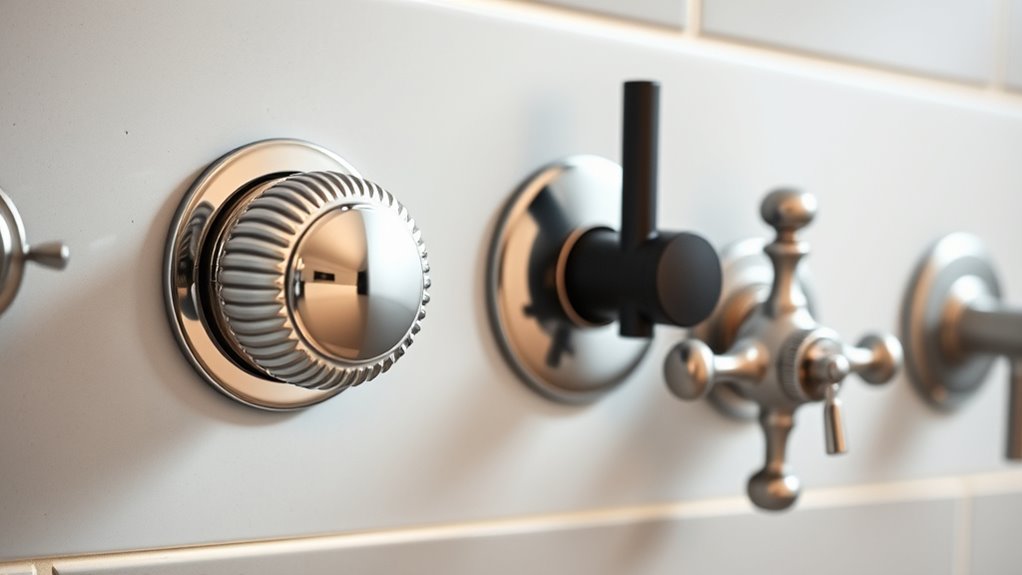
If you want to tell different shower valves apart just by looking at them, start by checking out the handles. Some handles are round, others are square, and some are lever-style. Noticing these differences can give you a good clue about what type of valve you’re dealing with.
Then, take a look at where the valve is mounted on the wall and how it’s positioned. This can also help you identify the kind of valve you have. Getting familiar with these visual features makes it way easier to identify the right valve quickly and accurately.
Handle Designs and Shapes
Shower valve handles come in many shapes and styles, so you can often tell what type of valve it is just by looking at the control.
For example, a single lever usually means a thermostatic or pressure-balanced valve—these are used for precise temperature control and water flow.
Round, knob-like handles are common with traditional pressure-balance valves and make adjustments simple.
Triangular or flat handles tend to be modern and focused on ease of use.
Some handles are slim and elongated for a sleek look, while others are wider for a better grip.
Recognizing the handle shape helps you quickly identify the valve’s function, especially since different designs reflect how they control temperature and flow.
Keep an eye on these details for an accurate understanding of what each handle does.
Mounting and Placement
Some valves are hidden behind the wall, with only the handle visible. This usually indicates a concealed or thermostatic valve.
Other valves are exposed, mounted directly on the shower surface. This is common for pressure-balancing valves.
Proper placement can also help with water conservation. Roughly positioned for easy access helps minimize water waste.
Installation safety is important. Make sure valves are securely mounted at the right height to prevent leaks or damage.
If you see a valve that’s tightly embedded or flush with the wall, it’s probably a concealed type.
Recognizing these visual cues helps you understand the valve’s function and can guide maintenance or upgrades.
Tools for Diagnosing Your Shower Valve at Home
To diagnose your shower valve at home, you’ll want to gather a few simple tools. A pressure gauge is super handy for checking the water flow—it lets you see if pressure issues might be the culprit.
And don’t forget about leaks! Learning how to spot them quickly can save you a lot of time and help prevent any bigger problems down the line.
Essential Diagnostic Tools
When troubleshooting your shower valve at home, having the right diagnostic tools can make all the difference. A basic inspection mirror helps you see behind pipes, while a flashlight illuminates hard-to-reach parts.
A small flat-head screwdriver aids in removing panels without damage. To understand your shower valve’s history, consider tools like a wrench for loosening fittings or a flashlight to spot corrosion or mineral buildup.
Knowing the shower valve history can guide you on potential wear or issues caused by plumbing regulations over time. A digital multimeter can check for electrical problems in electric shower valves.
Collectively, these tools help you assess the valve’s condition, identify wear or damage, and ensure your repairs meet plumbing standards.
Using a Pressure Gauge
- Check if the pressure is within the recommended ranges for your home.
- Compare the flow rate at different outlets to spot any inconsistencies.
- Keep an eye on the pressure over time to catch any drops or spikes.
These steps give you a clear idea of your water pressure, helping you decide if your shower valve needs tweaking or fixing.
Identifying Leaks Effectively
Identifying leaks in your shower valve is key to stopping water waste and avoiding expensive damage. Start by watching the water flow—if it drips constantly or sprays irregularly, you probably have a leak.
Feel around the valve for any moisture or pooled water, as these are signs of a leak. Check the valve materials; brass or plastic can show corrosion or cracks that might cause leaks.
Use a flashlight to look behind the tile or around the base for hidden water damage. Turn off the water supply and listen carefully for hissing sounds, which could mean internal leaks.
Often, tightening connections or replacing worn parts can fix the problem. If leaks keep happening, it’s a good idea to call in a professional.
Regular inspections help keep your shower running smoothly and can prevent bigger repairs later on.
How to Identify Traditional Compression and Pressure-Balance Valves
To tell apart traditional compression and pressure-balance shower valves, look at how they’re designed and how they work.
Traditional compression valves have simple parts with a tight seal that controls water flow. They use a threaded stem and washer, usually made of brass or metal, which makes them durable but sometimes prone to leaks.
Pressure-balance valves include a diaphragm or piston that reacts to changes in water pressure. This helps keep the water temperature steady by adjusting flow quickly when pressure fluctuates.
When checking their materials, keep in mind that compression valves are often brass or metal, while pressure-balance ones may have diaphragms or pistons inside.
The water flow mechanisms also differ: compression valves rely on mechanical seals, and pressure-balance valves use diaphragms or pistons to regulate flow.
In terms of operation, compression valves need manual adjustment, while pressure-balance valves react automatically to water pressure changes, providing more consistent temperature control.
How to Recognize Modern Thermostatic Shower Valves
Modern thermostatic shower valves are pretty easy to recognize once you know what to look for. They usually have some kind of digital screen or clear dial—kind of like a thermostat in your house—that shows the temperature. It’s all about keeping things simple and accurate so you can get just the right water warmth.
Their sleek designs often come with intuitive controls, so you don’t have to fuss around. Just turn a knob or tap a button, and the valve will set and hold your preferred temperature. So, if you’re seeing a tidy, easy-to-read display and smooth controls, chances are you’re looking at a thermostatic shower valve.
Temperature Control Features
Are you able to spot the key features of a thermostatic shower valve? Look for temperature control features that allow precise water flow regulation, maintaining a consistent temperature regardless of pressure changes.
Modern thermostatic valves often have a dedicated control for setting your preferred temperature, making adjustments straightforward. To identify these valves, observe if there’s a separate thermostat control, usually marked with temperature indicators.
Furthermore, many include safety features like an anti-scald function to prevent sudden temperature spikes. When installing or replacing, pay attention to installation tips that ensure correct water flow direction for maximum performance.
Recognizing these features helps you select a valve that offers safe, reliable, and adjustable comfort.
- Separate temperature control dial
- Safety anti-scald mechanism
- Clear temperature markings
Design and Display
Recognizing modern thermostatic shower valves often starts with examining their design and display features. These valves usually have sleek, minimalist looks that blend into modern bathroom decor, boosting the overall style.
Look for digital displays or ergonomic control knobs that show precise temperature settings. These are common in modern models and make it easy to get the perfect shower temperature. The displays are typically clear, easy to read, and often lit up for visibility in low light.
The design focuses on both style and functionality, making installation easier for skilled plumbers. Recognizing these features helps ensure you pick the right valve during installation.
Modern thermostatic valves often have hidden or semi-hidden bodies, keeping the look clean and clutter-free. Their thoughtful design celebrates both form and function, making them simple to identify.
What Is a Diverter Valve and How Can You Spot It?
A diverter valve is an important part of your shower system that helps you switch between different water outlets—like the showerhead, handheld sprayer, or bathtub faucet—without needing separate fixtures. Its main job is to direct water where you want it, making your shower setup more flexible.
You can identify a diverter valve by looking for a small lever, knob, or switch usually found on the showerhead, tub spout, or pipes. These controls are built to manage diverter functions easily.
There are different types of diverters, including slide, push-button, and twist-style options. Each type works best with different setups. They are designed to give you quick and easy control over your water flow.
Choosing the Right Shower Valve for Your Needs
Choosing the right shower valve is key to a comfortable and functional shower experience. When installing a shower valve, think about your water pressure and how it varies throughout the day.
If you have low water pressure, look for a valve designed to boost flow or keep pressure steady. If your water pressure is high, a valve that regulates flow can help prevent splashing.
Your preference for temperature control also matters. Some valves have a single handle for easy adjustments, while others require separate controls. Consider how simple and quick you want your temperature changes to be.
Think about how many outlets you’ll need. If you plan to switch between multiple showerheads or add a handheld wand, a diverter valve is the way to go.
Lastly, consider the durability and build quality of the valve. Picking a model suited to your water pressure and usage will ensure it runs smoothly and lasts longer, giving you a better shower experience.
Benefits of Different Shower Valve Types Explained
Different shower valve types offer distinct advantages that can improve your bathing experience. Choosing the right one can make installation easier and help regulate water flow better.
For example, single-handle valves make adjusting temperature straightforward by controlling both flow and temperature with one move. Thermostatic valves keep the water temperature steady, preventing sudden changes that can be uncomfortable.
Diverter valves give you control over multiple shower heads or a tub spout, making your shower setup more flexible. Overall, each type offers benefits like easy water flow regulation, consistent temperature control, and improved functionality for a more enjoyable shower.
Troubleshooting Common Shower Valve Problems Based on Your Identification
When your shower isn’t working properly, quick identification of the problem can save you time and effort. Start by checking if mineral buildup or debris might be causing the issue.
Getting rid of mineral buildup through shower valve cleaning can improve water flow, especially if you notice uneven temperature or reduced pressure. For inconsistent hot or cold water, you may need to adjust the water pressure.
Some shower valves have a built-in pressure balancing feature. Adjusting this can help stabilize the water temperature. If you’re experiencing low water flow, inspect the valve for blockages or leaks.
Sometimes, the valve cartridge needs replacement or repair. If you want higher water pressure, you might be able to adjust the pressure regulator if your system allows. Always remember to shut off your water supply before cleaning or making adjustments.
Regular maintenance, like cleaning the shower valve and adjusting water pressure, can prevent problems and help extend the lifespan of your shower valve.
Frequently Asked Questions
Can Shower Valves Be Repaired or Do They Need Replacement?
Shower valves can often be repaired through DIY fixes if the problem is minor, like replacing a washer or cleaning cartridges.
But if those repairs don’t fix the issue, you might need to replace the valve entirely to ensure it works properly and prevent future leaks.
Always evaluate how bad the problem is first. More complex issues usually mean you should call in a professional or opt for a full replacement instead of risky DIY fixes.
Are There Specific Brands Known for Durable Shower Valves?
Think of shower valve brands as knights guarding your bathroom fortress. Brands like Moen, Kohler, and Grohe stand out for their reputation, where each one is known for defending product longevity and durability.
Choosing these brands guarantees you get a reliable, long-lasting valve. Their reputation is built on quality craftsmanship, so you won’t have to worry about frequent replacements.
Investing in trusted names means your shower remains a stronghold for years to come.
How Often Should Shower Valves Be Maintained or Inspected?
You should inspect and maintain your shower valve at least once a year to ensure it works properly.
Stick to a regular maintenance routine and check for leaks, corrosion, or any signs of reduced water pressure.
While inspecting, turn the handle smoothly and listen for any unusual noises.
If you notice problems like leaks or if parts seem worn, replace them quickly.
Regular upkeep keeps your shower valve running smoothly and helps prevent costly repairs later on.
What Safety Features Should I Look for in Modern Shower Valves?
You need to look for shower valves with incredible safety features that can literally save your skin, like advanced temperature regulation and anti-scald technology.
These features act like shields, preventing sudden and dangerous temperature changes. Modern valves with precise controls and automatic shutoff protect you from burns and water mishaps.
Make sure your valve includes these safety innovations for peace of mind. This way, you can enjoy a relaxing shower without worrying about scalds or unpredictable temperature spikes.
Are There Eco-Friendly or Water-Saving Shower Valve Options?
Yes, eco-friendly options and water-saving technology are widely available in shower valves today. You can choose models with aerators or flow restrictors, which limit water flow without sacrificing performance.
Look for valves labeled as water-efficient or with certifications like WaterSense. These eco-friendly options help conserve water, lower your utility bills, and reduce your environmental impact.
They make your shower more sustainable without sacrificing comfort.
Conclusion
By understanding how each shower valve works and recognizing their signs, you’re the captain steering your bathroom’s comfort ship. Whether it’s a pressure-balance or a diverter valve, knowing your options helps you navigate repairs and upgrades smoothly.
Think of your shower valve as the orchestra conductor, ensuring every note of your shower experience hits just right. With the right knowledge, you can keep your shower performing like a symphony without missing a beat.
Knowing the different types of shower valves, including thermostatic and manual models, makes it easier to choose the right one for your needs. Recognizing signs of wear or failure helps you decide when to fix or replace.
Understanding how each valve works gives you confidence when troubleshooting issues or upgrading your system. Being familiar with these options puts you in control of your bathroom’s comfort and safety.