What Are the All Standard Sizes for Bathroom Sink Faucets?
Struggling to find the right bathroom sink faucet that fits perfectly and looks great? You’re not alone—many people face this challenge when remodeling or updating their bathroom. Luckily, understanding standard sizes can make the shopping process much easier.
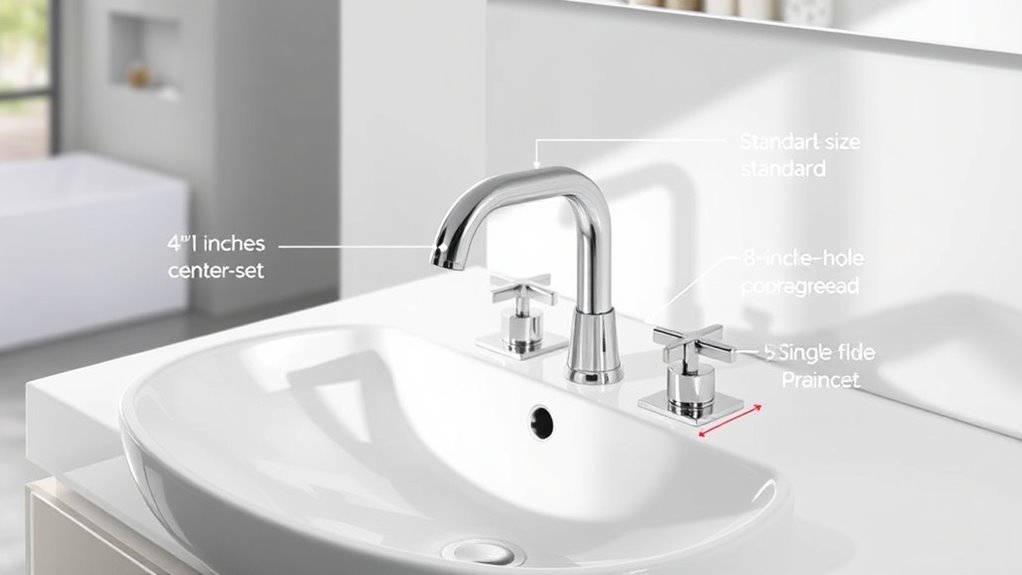
Bathroom sink faucets come in standard sizes that guarantee a proper fit and smooth installation. Common faucet hole diameters range from 1.25 to 1.75 inches, fitting most sinks securely.
Styles include single-handle, centerset, and widespread configurations, usually with 4 to 8-inch spacing.
Spout heights vary from 5 to 8 inches, depending on your needs. If you want to find the perfect fit for your sink, keep exploring for detailed sizing tips.
Key Takeaways
- Standard faucet hole diameters usually range from 1.25 to 1.75 inches to ensure compatibility.
- Common sink faucet setups include single-hole, centerset (4 inches), and widespread (8-16 inches).
- Spout heights typically vary from 5 to 8 inches, which impacts water clearance and splash control.
- Faucet sizes should match your sink dimensions and bathroom decor for a good fit and a nice look.
- Taking proper measurements of mounting, reach, and clearance makes sure everything fits well and installation is easy.
How to Measure Your Sink for the Right Faucet Size
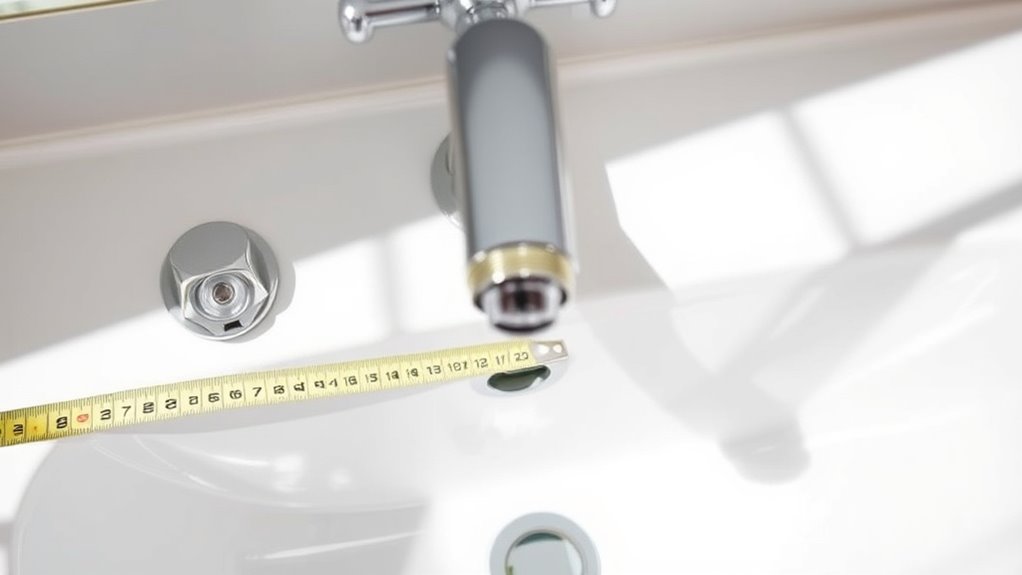
Before shopping for a new bathroom sink faucet, it’s important to measure your sink accurately so it fits well. Start by measuring the distance from the center of the drain to the back edge of the sink. This helps determine the spout reach and prevents splashing outside the basin.
Next, check the depth of your sink from front to back. This will confirm if the faucet has enough clearance, especially if you have tiled walls or patterns that could affect space. While measuring, think about water-saving options like low-flow faucets, which have different sizes and aerator styles.
Don’t forget to inspect the mounting hole size. Most standard sinks have a 1 3/8-inch hole, but it’s helpful to verify this before buying. Proper measurements make it easier to pick a faucet that fits comfortably and looks good in your bathroom.
Getting accurate sizing ensures your faucet will work well and look great in your space. Taking the time to measure properly means you’ll avoid issues and enjoy a functional, stylish sink area.
A Guide to Standard Bathroom Sink Faucet Sizes
When you’re choosing a bathroom sink faucet, it’s helpful to get familiar with the common diameter standards. These measurements are important because they ensure the faucet fits your sink properly. If the diameter isn’t right, you might end up with leaks or a faucet that just doesn’t sit right.
It’s also good to know about the typical spout heights and reach. These details help make sure you get a faucet that’s comfortable to use and provides enough coverage for your sink. Nobody wants to have to lean in awkwardly or splash water everywhere!
Lastly, taking a look at the standard mounting types can make the installation process much easier. By understanding the options, you can choose a faucet that’s compatible with your sink setup without any hassle.
Common Diameter Standards
When selecting a bathroom sink faucet, understanding standard diameter measurements is key to ensuring compatibility and a proper fit. Most common faucet hole diameters range from 1.25 to 1.75 inches, giving you flexibility across different sink types.
This range also supports innovative designs that often feature unique mounting systems, making installation easier. Many manufacturers now focus on eco-friendly options, which may involve slightly larger diameters to accommodate water-saving features.
Knowing these standards helps you avoid mismatched fittings and ensures your faucet operates smoothly. Whether you’re upgrading or installing a new sink, sticking to these diameter standards simplifies things and guarantees your faucet will be both functional and stylish.
Typical Spout Heights
Understanding typical spout heights is key when choosing a bathroom sink faucet to ensure comfortable clearance and proper functionality.
Standard spout heights generally range from 5 to 8 inches, providing enough space for daily tasks and fitting various sink styles.
If you like vintage designs, you might go for faucets with taller spouts to boost aesthetics and ease of use.
When selecting eco-friendly materials, make sure the spout height complements the sink’s design without sacrificing accessibility.
Higher spouts help prevent water splashing on countertops and make filling larger vessels easier.
As a general tip, measure your sink’s depth and clearance before picking a faucet to ensure good flow and usability, no matter the style or material.
Standard Mounting Types
- Guarantees proper fit and secure attachment.
- Influences ease of installation and repairs.
- Determines pipe threading quantities and sizes.
- Affects water flow rates and pressure control.
- Improves overall bathroom faucet functionality.
Understanding Faucet Spout Heights and How They Matter
Faucet spout height is a key factor to consider because it affects how easily you can use your sink. A taller spout gives more room, making it simpler to wash big items or fill tall bottles.
On the other hand, a lower spout might be just right for small spaces or if you like a sleek, minimalist look. When choosing personalized faucet designs, make sure the spout height matches your style and practical needs.
It’s also good to keep in mind that eco-friendly plumbing options often focus on water efficiency. Getting the right spout height can help prevent splashing and save water.
Picking a faucet with the perfect spout height means you’ll get both functionality and style. Whether you prefer a modern, artistic, or traditional look, understanding spout height helps you choose the best fixture for your bathroom.
Common Faucet Hole Configurations and What They Need
Most bathroom sinks come with specific hole setups—usually one, two, or three holes. It’s helpful to know the standard configurations so you can pick the right faucet and fittings.
Plus, different styles of faucets, like single-handle or widespread, will also influence what you need. Being aware of these details makes shopping for a new faucet much easier and ensures everything fits perfectly.
Standard Hole Numbers
Are you aware of the common hole configurations required for different bathroom sink faucets? The number of holes needed varies based on the faucet style and your bathroom decor. Typical setups include single-hole, widespread, and centerset configurations, each serving different aesthetic and water efficiency needs.
Single-hole faucets simplify installation and conserve space. Widespread faucets often feature three holes, allowing for flexible design. Centerset faucets combine hot and cold controls in one unit, usually with three holes.
Four-hole setups accommodate soap dispensers or additional accessories.
Knowing your faucet’s hole requirements helps you match the right fixture to your sink. This ensures water efficiency and a cohesive look. Choosing the correct number of holes prevents unnecessary modifications and streamlines installation, enhancing your bathroom decor.
Different Fitting Types
Knowing the different fitting types and their corresponding hole configurations makes choosing the right bathroom sink setup much easier.
Common faucet hole setups include single-hole, centerset, and widespread. Single-hole faucets need just one hole for a clean, sleek look.
Centerset setups use three holes, usually 4 inches apart, offering a good balance between style and practicality. Widespread fittings have separate holes about 8 inches apart, giving you more flexibility in design and placement.
Your choice can affect your bathroom’s overall look, so pick based on your style preference. Also, think about faucet materials like brass, stainless steel, or chrome to match your decor and ensure durability.
Understanding these fitting types helps you pick fixtures that fit your sink’s size and layout, making installation easier and enhancing your bathroom’s overall style.
Choosing the Right Centerset Faucet Width for Your Sink
- Guarantees easy access to water controls without crowding.
- Supports eco-friendly choices by selecting sustainable materials.
- Promotes water efficiency with integrated saving features.
- Avoids mismatch with sink dimensions for seamless installation.
- Contributes to a balanced, visually pleasing bathroom design.
Widespread Faucets: Sizes and Tips for Proper Fit
Widespread faucets are a versatile and stylish choice for bathroom sinks, but picking the right size is key to a proper fit and good function. These faucets usually have separate hot and cold handles, with the distance between them ranging from 8 to 16 inches.
To ensure a good fit, measure your sink’s faucet holes and check the spacing before buying. Faucet materials like brass, stainless steel, or acrylic affect durability and looks but don’t impact size.
Keep in mind that larger sizes might boost water flow for better performance, but they can also use more water unless equipped with efficient aerators. Proper sizing helps everything work smoothly and prevents leaks from mismatched parts.
When selecting a widespread faucet, think about your sink’s hole setup, material, and desired water flow rate. This way, you get both a beautiful look and top-notch functionality.
Single-Handle vs. Double-Handle Faucets: What Size Do You Need?
Choosing between single-handle and double-handle faucets really comes down to your style and your sink setup, but size matters too. Single-handle faucets tend to save space and make controlling water easier, which works well with modern bathroom looks.
Double-handle models give you more precise control over temperature, which might be better if you’re focused on water efficiency. Remember to check a few things:
- Size compatibility: Make sure the faucet’s height and reach fit your sink to avoid splashing.
- Style consistency: Match the faucet size to your overall bathroom style, whether it’s minimalist or traditional.
- Ease of use: Larger handles on double-handle models can be easier for some people to operate.
- Water efficiency: Smaller or aerated models help save water without losing performance.
- Maintenance: Simpler or smaller models are generally easier to keep clean and maintain over time.
Size Tips for Vessel and Wall-Mount Faucets
Vessel and wall-mount faucets need careful size consideration to ensure they fit your sink and boost your bathroom’s functionality. For vessel setups, check the faucet’s height and spout reach to make sure it extends comfortably over the vessel sink without splashing or getting in the way. Measure the vessel’s height and depth to choose a faucet that looks good and works well.
Wall-mount compatibility depends on your wall space and plumbing placement. Make sure to verify your wall’s thickness and the distance between mounting points. If space is tight, pick a wall-mounted faucet with a shorter spout or adjustable features to fit nicely.
Getting the right size prevents awkward use, splashing, and installation problems. Keep in mind that vessel sinks often need taller faucets, so check your sink’s height to avoid hitting the faucet when using it.
How to Pick Faucet Sizes to Match Your Bathroom Decor
Selecting a faucet size that complements your bathroom decor involves considering both the overall style and the visual balance within your space. Choose a size that matches your decor style—whether it’s sleek and modern or classic and ornate. Make sure the faucet’s proportions don’t overpower or get lost in the sink area.
Color coordination is also important. Match or contrast the faucet’s finish with your fixtures and accessories to keep everything harmonious. Plus, think about the shapes and scale of other elements in your bathroom to create a cohesive look.
To help you choose, keep these points in mind:
- Match faucet size with your sink and countertop proportions
- Consider your decor style for an authentic look
- Use color coordination to tie everything together
- Balance the faucet’s shape with the overall room design
- Think about functionality along with style
Troubleshooting Fit Issues With Standard Faucet Sizes
Even when faucet sizes fall within standard ranges, you might still face fit issues because of variations in sink or countertop dimensions. If the faucet doesn’t line up properly or overlaps with backsplash areas, measurement errors could be the culprit.
To troubleshoot, double-check your sink and countertop measurements before buying or installing a new faucet. Sometimes, color matching influences style choices, but compatibility really depends on size rather than appearance.
If your faucet has inconsistent water flow or it’s hard to control, it might point to installation issues or incompatible fittings, even for standard sizes. Adjusting mounting hardware or using adapters can often fix these problems.
Always verify the dimensions of your existing plumbing and the faucet before installation. This helps ensure a good fit and smooth water flow, which reduces costly replacements or rework.
Proper measurement and awareness of size variations make troubleshooting fit issues much easier.
Frequently Asked Questions
Are There Universal Sizes for All Bathroom Sink Faucets?
No, there aren’t universal sizes for all bathroom sink faucets.
You need to consider your bathroom’s style and the installation requirements when selecting one.
Typically, the hole spacing for centers ranges from 4 to 8 inches, but spout heights can vary.
Be sure to measure your sink’s existing holes and check the installation guides.
This will help ensure your new faucet fits properly and works smoothly.
Following these steps makes sure your faucet complements your bathroom’s look and functions without any issues.
How Do I Determine the Best Faucet Size for Small Sinks?
You need a faucet perfectly sized for your small sink, like a tiny but mighty hero in your bathroom decor. Measure the distance between the mounting holes, which are usually 4 or 8 inches. Then, choose a faucet that fits snugly without overwhelming the space.
Think about the spout reach and height to avoid splashes. It’s all about balancing functionality and style in your compact bathroom. Picking the right size makes plumbing easier and keeps your bathroom looking sleek and balanced.
Can Faucet Size Affect Water Pressure and Flow?
Faucet size can influence water flow and pressure, especially if it doesn’t match your sink’s installation.
A larger faucet might give you more flow, but it could also waste water and make conservation harder.
Smaller or standard-sized faucets usually find a good balance between flow and saving water.
Make sure your chosen faucet fits your sink’s setup to avoid leaks and inefficiency.
This helps you save water and keeps your water pressure just right.
Do Different Faucet Styles Require Specific Sizes?
Yes, different faucet styles often need specific sizes to install properly and work with your plumbing. For example, widespread faucets require a certain distance between holes, while single-handle or vessel sink faucets might have different measurements.
When choosing a faucet, it’s a good idea to measure your sink and check the manufacturer’s specs. This helps ensure everything fits perfectly.
Getting the right size helps prevent leaks, makes installation easier, and ensures good water flow.
Are There Adjustable Faucet Sizes or Only Fixed Options?
Faucet sizes are generally fixed, not adjustable, but many faucets work with different sink setups.
When choosing a faucet, it’s important to consider compatibility and installation details.
Fixed sizes tend to be more reliable, but making sure your faucet fits your sink ensures a broader range of options.
To get it right, measure your sink’s holes and check your faucet’s specifications.
This helps you avoid surprises and makes installation smoother.
Conclusion
Finding the right bathroom sink faucet size might seem tricky, but knowing the standard sizes makes it easier.
Measure carefully, consider your sink’s configuration, and match your style. When you choose wisely, you’ll enjoy a perfect fit that complements your bathroom design.
Typical standard sizes include a 4-inch widespread, a 4-inch centerset, and a single-hole faucet.
Understanding these sizes can help you pick the perfect faucet for your sink.
So, isn’t it worth taking the time to get it just right? After all, the right bathroom sink faucet isn’t just about function—it’s about creating a space where you feel comfortable and confident each day.