How to Decide if Electric Heat Pump Water Heaters Are Worth It
Many homeowners struggle with balancing cost, efficiency, and environmental impact when it comes to hot water systems. If you’re considering an upgrade, electric heat pump water heaters might be just what you need. They’re known for their energy savings and eco-friendly operation, which can make a big difference over time.
To decide if electric heat pump water heaters are worth it, consider your climate, space, and household hot water needs. They’re highly efficient and eco-friendly, saving you money over time, especially in warmer areas.
However, cold climates might reduce their effectiveness, and they require proper installation space.
If you want to maximize long-term savings and sustainability, it’s important to weigh these factors carefully. Exploring more details can help you make the best choice for your home.
Key Takeaways
- Assess your climate. Warmer regions make heat pump water heaters more efficient and cost-effective.
- Consider space requirements. Make sure there’s enough airflow and ventilation for the best performance and quiet operation.
- Evaluate long-term savings. While the upfront cost is higher, you’ll save on energy bills and might qualify for rebates.
- Check your household hot water needs. Proper sizing prevents inefficiency and ensures you always have hot water when you need it.
- Review maintenance and warranty coverage. Regular upkeep and solid warranties can extend the lifespan and protect your investment.
How Do Electric Heat Pump Water Heaters Work?
Ever wonder how electric heat pump water heaters manage to warm water so efficiently? They use a clever method that makes them a popular choice among water heating options focused on energy conservation.
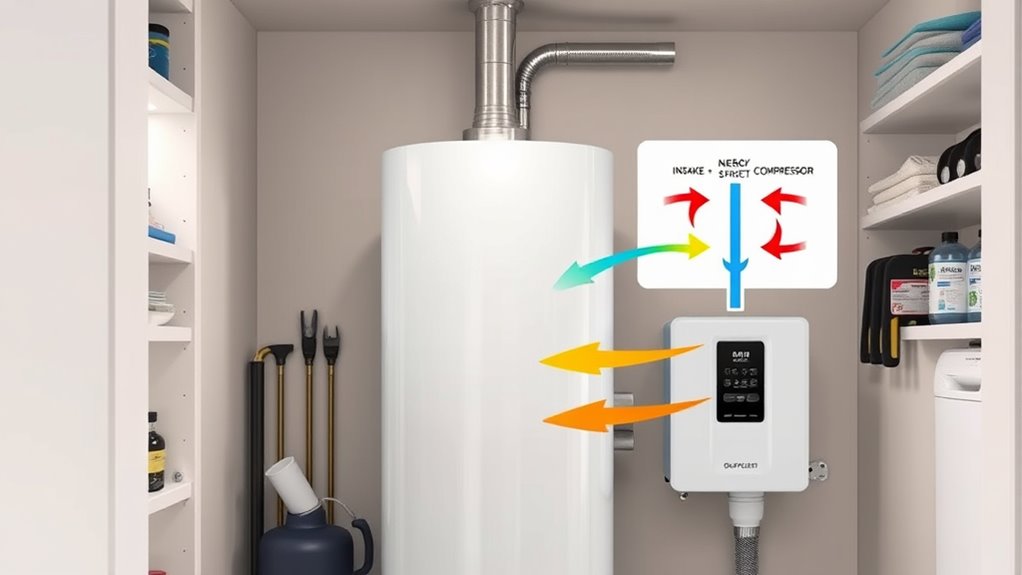
Instead of generating heat directly like traditional models, heat pumps transfer heat from the air outside the tank into the water. They contain an evaporator coil that captures ambient heat, a compressor that concentrates that heat, and a condenser that transfers it to your water supply.
Heat pumps transfer ambient air heat into water using coils, compressors, and condensers for efficient, eco-friendly warming.
This process uses significantly less electricity because it’s moving heat rather than creating it from scratch. By harnessing existing heat from the environment, these systems minimize energy consumption, making them eco-friendly and cost-effective over time.
Their ability to efficiently extract and use surrounding heat is what sets heat pumps apart in the world of water heating options. If saving energy is a priority, understanding how they work shows why they’re such an appealing choice.
What Makes an Electric Heat Pump Water Heater Different From Traditional Models?
Unlike traditional water heaters that generate heat directly through electric resistance or gas burners, electric heat pump water heaters transfer heat from the air to your water.
This makes them much more efficient, often using less energy than conventional models. Instead of resistance coils, heat pumps work like reverse air conditioners by extracting warmth from the air around them and moving it to the water tank.
Because of this process, they’re a great alternative that can lower your energy bills and reduce environmental impact. The main difference is how they operate—using the ambient air and a refrigeration cycle to heat water instead of directly converting electrical energy into heat.
This innovative method not only boosts efficiency but also means less maintenance and long-term savings. So if you’re after a more sustainable and cost-effective option, heat pump water heaters are worth considering over traditional models.
What Are the Main Benefits of Choosing a Heat Pump Water Heater?
Opting for a heat pump water heater can really give your home’s energy efficiency a big boost, which means you can save a good amount on your utility bills. It’s like getting the same hot water you need but using less electricity to do it.
Plus, it’s a pretty eco-friendly choice. Since it uses less energy, it helps cut down on your carbon footprint. It’s a win for both your wallet and the planet, making heat pump models a smart and sustainable option for your home.
High Energy Efficiency
Have you thought about how much energy a traditional water heater uses? Heat pump water heaters are known for their high energy efficiency, making them a smart choice for saving energy. They pull warmth from the air and use less electricity than conventional models, which benefits both your wallet and the environment. This efficiency also supports renewable energy goals by reducing reliance on fossil fuels.
Here’s a quick visual overview:
| Benefit | How It Works | Impact |
|---|---|---|
| Reduced Energy Use | Extracts heat from air instead of directly heating water | Uses less electricity |
| Cost Savings | Lower energy bills thanks to efficiency | More affordable to operate |
| Eco-Friendly | Supports renewable energy initiatives | Produces fewer greenhouse gases |
| Long-Term Durability | Built for longevity | Fewer replacements and less waste |
Cost Savings Potential
Are you curious about how much money you could save by switching to a heat pump water heater? It’s one of the main benefits, especially if you implement energy-saving tips. These systems use significantly less electricity than traditional models, which helps lower your utility bills over time.
Plus, many regions offer financial incentives like rebates or tax credits to encourage their adoption. While the upfront cost might be higher, the long-term savings can outweigh this initial expense.
By choosing a heat pump water heater, you’re investing in lower operational costs and reduced energy consumption. To get the most savings, consider pairing it with other energy-efficient upgrades around your home.
Environmentally Friendly Operation
Because they run efficiently and use less electricity, heat pump water heaters greatly lower your home’s carbon footprint. They harness renewable energy from the air around you to produce hot water, making them an eco-friendly choice.
By consuming fewer resources, they reduce greenhouse gas emissions compared to traditional water heaters. This environmentally friendly operation supports renewable energy goals and helps you rely less on fossil fuels.
Opting for a heat pump water heater benefits your household and contributes to the larger effort to reduce environmental impact. It’s an effective way to stay sustainable while still being comfortable.
What Are the Drawbacks to Consider Before Installing a Heat Pump Water Heater?
Before you decide to go with a heat pump water heater, there are a few things you should keep in mind. For one, these units need enough space and the right placement. If they’re installed in a cramped or poorly ventilated area, they might not work as efficiently. Plus, when the weather gets really cold, their performance can drop a bit, so it’s something to think about depending on your climate.
Another thing to consider is noise. Some heat pump water heaters can be a bit noisy, and you might notice the vibrations too. This could be bothersome if you’re placing it near living spaces or bedrooms. It’s a good idea to plan where you put it carefully so it won’t disturb your comfort. Overall, weighing these factors can help you decide if a heat pump water heater is the right choice for your home.
Space Requirements and Placement
While heat pump water heaters are efficient, they need enough space and careful placement. Make sure there’s enough room for proper airflow around the unit, which can be bigger than traditional models.
Think about your storage needs too. A larger tank takes up more space, which could limit where you can put it. Noise is another factor—you’ll want to put the heater somewhere it won’t disturb your household or neighbors, since some models can be quite loud when running.
Proper placement also means avoiding tight, enclosed areas that trap heat or restrict ventilation. This can reduce the heater’s efficiency and performance. Before installing, measure your available space carefully.
Be prepared for a unit that might require more room than you initially expected. Proper setup ensures your heater runs efficiently and minimizes any inconvenience.
Efficiency in Cold Weather
Have you thought about how cold weather might affect your heat pump water heater’s efficiency? When temperatures drop, the air source heat pump struggles to extract heat, so it has to work harder. This makes it less efficient than it typically is.
Traditional systems aren’t affected by outdoor temperatures, so they keep running the same regardless of the weather. During winter months, your heat pump might turn to electric resistance backup more often, which uses more energy and hikes up your bills.
While using renewable energy is still good for the environment, you might see higher utility costs in winter. If you live somewhere with harsh winters, this efficiency dip could make a heat pump less cost-effective compared to traditional heating options. Be sure to consider the climate before deciding if a heat pump is right for you.
Noise and Vibration Levels
Heat pump water heaters can be quiet compared to traditional systems, but they still make some noise and cause vibrations when they run. If your water heater is near living spaces, this background noise might be noticeable and a bit disruptive.
To help with this, you can use vibration mitigation techniques like installing pads or isolators to reduce vibrations transferring to the walls or floor. Noise reduction options, such as placing the unit away from bedrooms or using soundproof enclosures, can also help.
Keep in mind that some operational noise is unavoidable, especially during the compressor cycle. By considering vibration and noise reduction options ahead of time, you can minimize these issues and enjoy the energy-saving benefits without much disturbance.
Are Heat Pump Water Heaters More Cost-Effective Than Conventional Water Heaters?
Deciding whether heat pump water heaters are more cost-effective than traditional models depends on several factors, including initial investment, energy savings, and long-term durability.
While heat pump models often cost more upfront, they can save you money over time through reduced energy bills. Energy subsidies play a vital role; many regions offer incentives that make these heaters more affordable.
Heat pump water heaters may cost more initially but save money long-term with lower energy bills and regional incentives.
Furthermore, technological advancements have improved their efficiency and lifespan, making them more reliable and cost-effective for many households. Although the upfront costs can be higher, the lower operational expenses usually make up for it over years of use.
Ultimately, whether they are more cost-effective depends on your local incentives, energy prices, and how long you plan to keep the water heater. If you’re in a region with strong subsidies and energy-efficient options, heat pump heaters could be a smarter investment than conventional models.
Is a Heat Pump Water Heater a Good Fit for Your Household and Climate?
Your climate really plays a big role in how well a heat pump water heater will work for you, particularly if you live somewhere colder. In chillier areas, the heater might have to work a bit harder to keep your hot water flowing, which could affect its efficiency.
It’s also important to think about how much hot water your household actually needs. Make sure the size of the heater matches your usage so you don’t end up with a unit that’s too small or bigger than necessary. And don’t forget to check if you have enough space for it and proper ventilation—these are key to making sure it runs smoothly and safely in your home.
Climate Impact on Efficiency
Climate plays a big role in how well a heat pump water heater works in your home. In warmer climates, they perform better because they can extract heat from the air more easily, needing less energy.
This means you rely less on traditional energy sources, which can help you use more renewable options and reduce your household’s carbon footprint. In colder areas, heat pumps might struggle to work efficiently, leading to more energy use and higher costs.
If your climate is suitable, a heat pump water heater can be a sustainable choice that helps lower environmental impact. Considering your local climate is key to maximizing energy savings and supporting eco-friendly habits in your home.
Household Hot Water Needs
Evaluating whether a heat pump water heater suits your household depends largely on your hot water usage patterns and the climate you live in. If your household uses a lot of hot water daily, a heat pump can be energy efficient, especially in moderate climates, helping lower your overall energy use.
Think about your water temperature needs. If you like very high temperatures or need quick recovery times, a traditional water heater might be a better option. Heat pump systems work best with moderate water temperatures and steady demand.
If your household’s hot water needs are typical and your climate supports lower ambient temperatures, a heat pump can be a good choice, saving you money and energy. But if your demand is high or you live in a cold environment, it may not be as suitable.
Space and Installation Factors
Choosing a space for a heat pump water heater depends on your home’s layout and available room.
These units need enough space for proper airflow and should be installed where it stays warm and dry, like a basement or utility closet.
Make sure the area is well-ventilated to boost energy efficiency and prevent humidity problems.
Weather and climate also matter—warmer areas make heat pump units more effective, saving you energy costs.
When planning your installation, compare manufacturer options to find models with good energy-saving tips and the right size for your household.
Proper placement and choosing the right model will help the unit perform well and make your investment worthwhile, fitting your home and climate needs.
How Much Space and What Installation Needs Do You Have for a Heat Pump Water Heater?
Before installing a heat pump water heater, it’s important to check if you have enough space and meet the installation requirements. These units usually need a dedicated spot with plenty of clearance for airflow and maintenance.
Ensure adequate space and clearance for proper airflow and maintenance before installing your heat pump water heater.
Be sure to check the product’s storage capacity to match your household’s hot water needs. Larger families might need a bigger unit, which will require more space.
Think about the height of the installation area, especially if you plan to place the heater in a basement, closet, or utility room. Many models need a minimum clearance at the top and sides for proper operation and ventilation.
Measure your available space carefully, including enough room for service access. Remember, good airflow is key to keeping the heater efficient and lasting longer.
If space is tight, consider compact models designed for smaller setups. Planning ahead now can prevent issues later and help ensure your heater runs smoothly.
What Features Should I Look for When Buying a Heat Pump Water Heater?
When shopping for a heat pump water heater, it’s important to focus on key features that guarantee efficient performance and long-term savings. Look for models with smart thermostats, which let you optimize water temperature and control energy use remotely.
These thermostats help prevent energy waste and can provide detailed usage data. Furthermore, prioritize units with strong energy certifications, like ENERGY STAR, to ensure the heater meets strict efficiency standards.
Certified models typically consume less electricity, saving you money over time and reducing your environmental impact. Other helpful features include variable-speed compressors for better temperature regulation and quieter operation.
A user-friendly interface and easy access to diagnostic information can also make maintenance simpler. By focusing on these features, you’ll select a heat pump water heater that’s reliable, efficient, and well-suited to your household needs.
How Do Maintenance and Warranties Affect Your Long-Term Investment?
Proper maintenance and an effective warranty plan are crucial because they directly impact the longevity and performance of your heat pump water heater. Regular upkeep helps reduce your overall maintenance costs by preventing breakdowns and keeping the system running smoothly.
Regular maintenance and a solid warranty extend your heat pump water heater’s lifespan and performance.
Simple tasks, like cleaning filters and checking refrigerant levels, can extend your unit’s lifespan and improve energy savings. These small efforts can make a big difference over time.
Warranty coverage offers peace of mind, protecting you from unexpected expenses if major components fail. A good warranty minimizes your out-of-pocket repair costs, making your investment more sustainable.
Without proper maintenance, you risk costly repairs and early replacement, which can lead to higher long-term costs. Similarly, limited warranty coverage can leave you vulnerable to expensive repairs, eroding your savings.
Should You Install a Heat Pump Water Heater? A Step-by-Step Decision Guide
Deciding whether to install a heat pump water heater depends on several key factors that align with your household’s needs and energy goals. First, think about how much you could save on energy; these heaters are super efficient but work best in warm, well-ventilated spaces.
Consider your budget and whether you’re comfortable with DIY installation. Some models are designed for easy setup, so if you’re handy, installing it yourself could save some money and make the upgrade more affordable.
Check your current water heater’s capacity and your household’s hot water needs to see if a heat pump unit is a good fit. Also, look into your local climate because colder environments might reduce the heater’s efficiency.
Energy savings, how easy it is to install, and your household’s usage patterns will help you decide if a heat pump water heater is a smart move. If these factors line up, it could be a great investment for your home.
Frequently Asked Questions
How Long Does It Typically Take for a Heat Pump Water Heater to Pay for Itself?
A heat pump water heater usually pays for itself in 3 to 7 years, depending on energy savings and installation costs. You’ll see savings because it uses less electricity than traditional heaters.
Though the upfront costs are higher, the energy efficiency helps lower your utility bills over time. So, if you’re planning to stay long-term, it’s a smart investment that will save you money eventually.
Can a Heat Pump Water Heater Be Used Effectively in Extremely Cold Climates?
Cold climate adaptation challenges can be tackled with proper insulation impact, making heat pump water heaters more effective in extreme cold. You should look for models designed for low temperatures and extra insulating features.
While extremely cold climates may reduce efficiency, strategic placement and improved insulation can help your heat pump work reliably year-round, ensuring warm water with less energy.
This way, you can stay confident that your heat pump will operate smoothly even in harsh weather conditions.
What Are Common Signs That a Heat Pump Water Heater Needs Repair or Replacement?
You’ll notice your heat pump water heater isn’t working properly when efficiency drops or it makes unusual noises.
Check for signs like increased energy bills or inconsistent hot water. Regular maintenance tips include cleaning filters and checking the refrigerant level.
If it won’t heat water, has leaks, or if repairs become frequent, it’s probably time for repair or replacement.
Monitoring its performance helps keep it running efficiently and lasts longer.
How Does the Noise Level of Heat Pump Water Heaters Compare to Traditional Models?
Imagine a whispering breeze replacing a loud engine—that’s how quiet heat pump water heaters are compared to traditional models. They produce a soft hum instead of noisy clanking or banging.
Their sound levels make for a more peaceful operation, so you won’t be easily disturbed, especially during nighttime or quiet moments. If peace and quiet matter to you, their lower noise levels make them a smart, silent choice.
Are There Specific Permits or Codes Required for Installing a Heat Pump Water Heater?
You need to check permitting requirements and local building codes before installing a heat pump water heater. Many areas require permits to guarantee safety and compliance.
Contact your local building department or code enforcement office to find out specific regulations. This will help make sure your installation meets all safety standards and prevent potential fines.
Following these guidelines ensures your system operates efficiently and that your installation is legal. Always double-check with local authorities to have a smooth, hassle-free process.
Conclusion
Deciding if a heat pump water heater is right for you depends on your home’s energy needs and space.
For example, a family saving on monthly bills might find it worth the investment, especially with long-term benefits like energy efficiency and durability.
Remember, proper installation and maintenance are key.
If you’re ready to reduce your carbon footprint and cut costs, a heat pump water heater could be be a smart and sustainable choice for your home.