How to Determine if Sink and Toilet Drains Are Connected
Dealing with drainage issues can be frustrating, especially when you’re unsure if your sink and toilet are connected. Many homeowners struggle with unexplained backups or slow drainage, and figuring out if these fixtures share a line isn’t always straightforward.
You’re not alone in this—understanding your plumbing setup can help you address problems more effectively.
To determine if your sink and toilet drains are connected, observe their drainage behavior. If one drains slowly or bubbles when the other flushes, they likely share a line.
You can also perform tests by running water from one fixture and watching for any impact on the other, like backup or gurgling sounds.
Inspections of pipe layouts and venting can reveal shared connections. Keep exploring to uncover more practical tips and solutions.
Key Takeaways
- Watch if flushing the toilet makes the sink drain slower or if you hear gurgling sounds.
- Pour water into the sink and see if it causes bubbles or fills up in the toilet tank or bowl.
- Listen for gurgling noises from fixtures when you use other drains—that can hint at shared venting problems.
- Check behind walls or under floors for pipes that might have debris or signs they connect to each other.
- Run water from different fixtures and observe if their drainage affects each other, indicating a shared drain line.
How Do Sink and Toilet Drains Usually Connect?
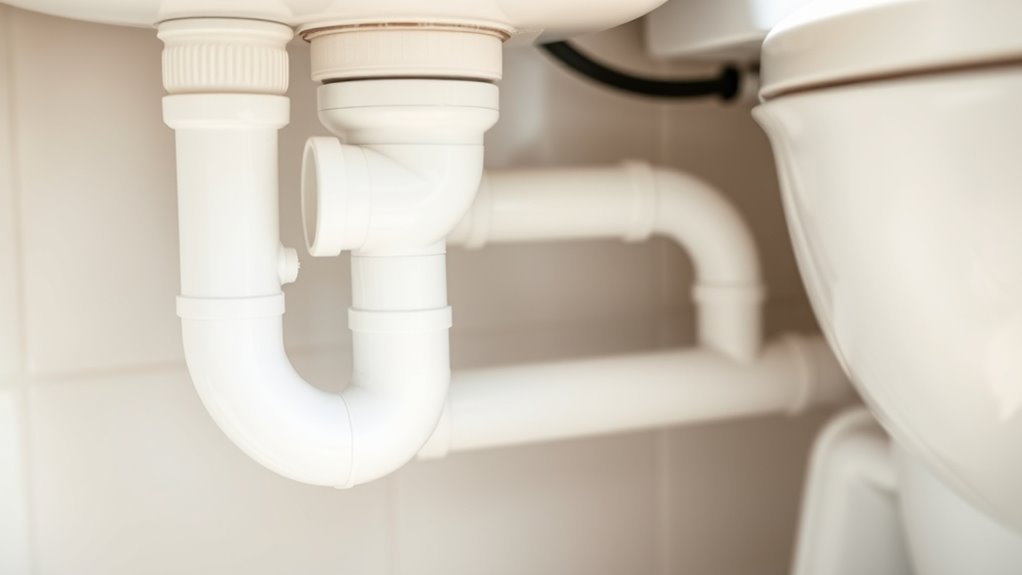
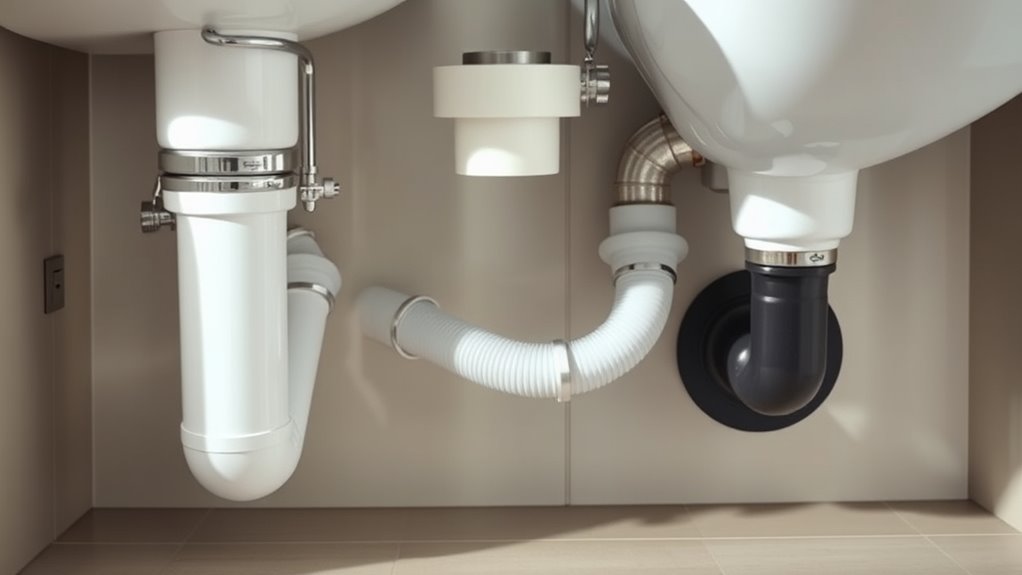
Usually, sink and toilet drains connect to the main sewer line through a network called the plumbing vent system. In your home’s plumbing setup, kitchen plumbing and laundry drains are typically routed into shared drain lines that lead to the main sewer.
The toilet’s drain usually connects directly to this system, with a waste pipe running from the fixture to a larger drain line. Kitchen plumbing often shares a drain with other sinks or appliances, with wastewater flowing into the same main line.
Laundry drains follow a similar route, connecting to the same network before reaching the main sewer. This interconnected system ensures wastewater from sinks, toilets, and laundry drains flows efficiently out of your home.
Signs That Your Bathroom Sink and Toilet Share a Drain Line
If your bathroom sink and toilet share the same drain line, you might start to notice some pretty obvious signs. For example, the sink could drain more slowly than usual, or you might hear gurgling sounds when you flush the toilet.
You could also smell unpleasant odors creeping into the bathroom, which is never fun. These signs usually mean that your drains aren’t working independently and are connected in a way that might cause issues.
Shared Drain Slow Drain
When your bathroom sink and toilet drain slowly at the same time, it’s a strong sign they might share the same drain line. This suggests there could be a clog or blockage somewhere in your indoor plumbing, which can cause slow drainage and backups.
If you notice both fixtures taking longer to empty or hear gurgling sounds during drainage, it’s time to check your drain. Shared drain issues usually mean a blockage affecting multiple points, so it’s important to act fast.
Signs to watch for include slow draining of both sink and toilet at the same time, unpleasant odors coming from either fixture, and gurgling noises during drainage.
Spotting these signs early helps you take action before the problem gets worse. Addressing drain issues promptly can save you from more serious plumbing headaches down the line.
Gurgling Noises During Flushing
You might notice odd sounds when flushing, especially if your kitchen plumbing and bathroom drains aren’t vented properly. These noises often happen because air is trapped in the pipes, which can mess with water pressure and flow.
When your sink and toilet are connected, a clog or partial blockage in the shared drain can create negative pressure, causing those gurgling sounds.
If you see that water pressure seems irregular when flushing, it’s a sign that air isn’t flowing freely through the drain line.
Fixing these issues early on can prevent more serious problems like sewage backups or slow drains.
Unpleasant Odors Emitted
Unpleasant odors emitting from your bathroom sink or toilet are strong indicators that both fixtures may share a drain line. If you notice persistent smells, it could be due to improper ventilation or clogged drain pipe materials, which trap odors and push them back into your bathroom.
Shared drain lines can cause sewer gases to escape, especially when ventilation issues block airflow. You might also notice that odors worsen after using either fixture or when the plumbing system isn’t functioning correctly.
To diagnose this, look for signs like lingering smells despite cleaning or odors that suddenly appear after draining. Proper ventilation and inspecting drain pipe materials for damage can help resolve the issue and confirm whether your sink and toilet are connected through a shared drain line.
How to Test If Your Sink and Toilet Drains Are Connected
To get a sense of whether your sink and toilet drains are connected, start by giving the pipes a quick visual check. Look for any shared connections or signs of blockages that might indicate a link.
Next, you can do a simple drain test. Turn on the sink and let the water run, then watch the toilet’s water level and see if it moves or drains slowly. If it does, chances are your fixtures are connected underneath. These easy tricks can give you a good clue about how your plumbing is set up.
Visual Inspection Techniques
To see if your sink and toilet drains are connected, start with a simple visual check. Look underneath each fixture for pipes that might be sharing a drain line or have insulation linking them.
When you run the sink or flush the toilet, watch how the water flows. If it backs up or drains slowly in both fixtures, that’s a sign they could be connected.
Here are some quick tips:
- Check shared pipes for cracks, leaks, or signs of moisture.
- Look for visible pipe insulation linking the two drains.
- Notice if water from one fixture seems to affect how the other drains.
Generally, if the drains are connected, you might see water flow problems in both fixtures. These visual clues can really help you spot the connection.
Conducting Simple Drain Test
Conducting a simple drain test can confirm whether your sink and toilet share a drain line. This technique goes back to old plumbing methods, showing how waste systems improved over time.
Testing now helps you quickly identify drainage connections. To do this, block the sink drain and flush the toilet. If the sink bubbles or slows down, the two are probably linked.
Here’s a quick reference:
| Test Step | Expected Result | Interpretation |
|---|---|---|
| Block sink, flush toilet | Water level rises or bubbles in sink | Drains are connected |
| Flush with sink open | Water drains smoothly in both | Drains are separate |
| Pour water into sink | Toilet refills or bubbles | Connected drain line |
| Wait afterwards | No change in water levels | Drains are not connected |
Knowing how drainage systems evolved makes it easier to diagnose your plumbing issues.
Using Your Drain Vent to Check for Drain Sharing
- Observe how quickly water clears; slow drainage hints at shared connections.
- Listen for gurgling sounds, which indicate air movement issues caused by drain sharing.
- Repeat the test with different fixtures to verify consistency.
This method helps you determine if your vent system and drain lines are properly set up or if they’re interconnected. Recognizing these patterns can prevent plumbing problems and guide repairs, making sure your drainage works smoothly.
Which Fixtures Commonly Share Drain Lines?
You’ll often notice that sinks and toilets share drain lines in certain parts of your home. It’s pretty common, especially behind walls or under floors, where multiple fixtures connect to the same pipe.
If you see things like slow drainage or hear gurgling sounds, those are clues that these fixtures are sharing a drain line. It’s one of those things that can be normal, but it’s good to keep an eye on it to catch any potential issues early on.
Shared Drain Pipe Locations
Have you ever wondered which fixtures usually share drain lines? Typically, sinks and toilets in the same bathroom or nearby areas share a drain pipe because they’re close together.
Shared drain locations are often behind walls or under floors, which makes detecting problems tricky. The pipe material also matters. Flexible PVC is common and easier to modify, while cast iron is more rigid but can handle more water pressure.
Here are some common fixtures that share drain lines:
- Bathroom sinks and toilets
- Kitchen sink and dishwasher
- Laundry tub and washing machine
Knowing these shared locations can help you spot potential clogs or issues. If fixtures are connected on the same drain, a problem with one can affect others, especially if water pressure drops or pipes get blocked.
Common Fixture Pairings
Many fixtures in your home usually share drain lines with specific counterparts, which makes it easier to identify where problems might happen. Bathroom fixtures like sinks, toilets, and bathtubs often share pipes for easier plumbing maintenance.
Understanding these common pairings helps you predict potential issues. When drain lines are shared, symptoms like slow drainage or backups can affect multiple fixtures at once.
Knowing these pairings allows you to trace drainage problems more effectively and plan repairs more efficiently. Recognizing how fixtures are connected simplifies troubleshooting and ongoing plumbing care.
| Fixture 1 | Fixture 2 |
|---|---|
| Bathroom sink | Shower or bathtub |
| Toilet | Floor drain |
| Bathroom sink | Toilet |
Signs of Connection
How can you tell if sinks and toilets share the same drain line? One sign is frequent clogs affecting both fixtures, which suggests they share a drain system.
You might also notice water backing up in the sink when you flush the toilet or a foul smell lingering around both fixtures. During drain cleaning, if you find debris or a narrow pipe connecting the sink and toilet, that’s a good clue they’re on the same line.
Another sign is pipe insulation around the drain that’s thicker or different between fixtures, indicating a combined system. Slow draining or gurgling sounds are also common signs of shared drains.
Recognizing these signs can help prevent major plumbing issues and guide proper maintenance.
Common Causes of Drain Connection Problems
Drain connection problems often come from common issues that develop over time or happen because of improper installation. One frequent cause is the type of drain material. Older pipes made of plastic or clay can crack or deteriorate, leading to leaks or blockages that affect your sink and toilet connection.
Another common problem involves the ventilation system. If vents are clogged or installed incorrectly, it can cause pressure buildup and slow drainage, making it look like your drains aren’t connected properly or causing backups.
Poor sealing or wrong fittings during installation can also create gaps or misalignments. This disrupts the flow and connection, leading to drainage issues. Additionally, debris or grease buildup in the pipes can restrict movement, causing slow drainage or backups.
Recognizing these issues early can help prevent bigger plumbing problems and save you money on repairs. Regular inspections and maintenance are key to keeping your drain connections working smoothly.
Simple Steps to Check If Your Drains Are Interconnected
To find out if your sink and toilet drains are connected, start by watching how water moves when you use each fixture. Flush the toilet, then run the sink with the faucet on. Look for signs like slow draining or water backing up—that can mean they are linked.
Pay attention if water from your kitchen sink or garbage disposal causes drainage problems elsewhere. These clues can help you discover if you have an interconnected drain system.
Water from the sink or disposal affecting other drains indicates a shared, interconnected plumbing system.
You can also do some simple checks:
- Fill the sink and see if the water drains slowly or bubbles when you flush the toilet.
- Pour a small amount of water into the garbage disposal and observe if it affects the toilet’s drainage.
- Run water in the sink and check if the toilet flushes or bubbles—that suggests a shared drain.
When to Call a Plumber About Your Drain Connections
Even if you’ve checked the basic signs of drain connections yourself, there are times when calling a plumber becomes essential. If you notice persistent clogs, bad odors, or slow drains despite your efforts, it’s time to seek professional help.
A plumber can assess whether your sink and toilet are connected properly, especially when dealing with issues that impact water conservation and eco-friendly materials. Improper connections can lead to water wastage or damage to eco-conscious plumbing systems, which harms environmental goals.
| When to Call a Plumber | Why It Matters |
|---|---|
| Persistent Blockages | Unresolved clogs can cause backups and water waste |
| Odors or Leaks | Signs of improper connections risking water loss |
| Unusual Noises | Indicate hidden drainage issues |
| Slow Drainage | Could signify a connection problem or clog |
| Environmental Concerns | Wasted water impacts eco-friendly water-saving efforts |
Troubleshooting Shared Drain Problems
When multiple fixtures share a single drain line, problems like slow draining or recurring backups can get really frustrating. To troubleshoot, start by checking the water pressure because low pressure can make drain issues worse. Next, inspect the pipe materials—older pipes might corrode or clog more easily.
Shared drain lines can cause backups—check water pressure and pipe condition to prevent issues.
Here are some tips to consider:
- Clear clogs: Use a drain snake or plunger to remove buildup in shared pipes.
- Check venting: Proper venting prevents airlocks that slow down water flow.
- Evaluate pipe condition: Old or damaged pipes could be causing blockages or leaks.
If these steps don’t improve drainage, it might be time to call in a professional. Keeping an eye on water pressure and knowing what your pipes are made of can help catch problems early and avoid costly repairs later. Remember, shared drains are complex systems that need regular attention to keep everything flowing smoothly.
Tips to Keep Your Drain Lines Separate and Avoid Problems
Keeping your sink and toilet drains separate is essential for preventing backups and costly repairs. One way to maintain this separation is by regularly inspecting your plumbing fixtures for leaks or clogs, which can signal potential connections.
Installing water filtration systems correctly can also help prevent debris from entering the drains, reducing the risk of blockages that might cause drain sharing. Confirm your plumbing fixtures are properly vented, as inadequate ventilation can trigger pressure issues that lead to cross-connection problems.
Avoid pouring grease, food scraps, or foreign objects down the sink or toilet, as these can cause blockages forcing waste into unintended pipes. If you notice persistent slow drainage or foul odors, it’s a good idea to call a plumber to verify and correct connections.
Proper maintenance and awareness of your plumbing fixtures will help keep your drain lines separate and prevent problems before they develop.
Frequently Asked Questions
Can Shared Drains Cause Odor Problems in My Bathroom?
Yes, shared drains can cause odor problems in your bathroom. When there’s an odor blockage, it usually means there’s a buildup or clogging that traps smells.
Ventilation issues can make this worse, causing odors to linger longer. You might notice a foul smell around your sink or toilet, especially when flushing or running water.
To fix it, check your drains for blockages and make sure your vent pipes are clear of obstructions. If the smell keeps coming back, consider calling a professional for cleaning.
How Does a Plumbing Inspection Reveal Drain Connections?
Like a detective scrutinizing a crime scene, a plumbing inspection reveals drain connections through drainage diagrams and leak detection.
You’ll see how each fixture links to the main stack, making sure everything flows properly. Leak detection devices find hidden escapes and indicate shared pathways.
This thorough approach uncovers hidden connections and helps prevent future issues.
Are There Specific Codes Regulating Drain Sharing in Homes?
Yes, there are specific drain connection rules you need to follow to stay in compliance with plumbing codes. Local building codes usually set standards for how sinks and toilets can share drain lines, focusing on proper venting and flow.
It’s a good idea to check your area’s plumbing code to make sure your drain setup meets all safety and function standards. Non-compliance can cause plumbing problems and even lead to penalties.
What Tools Are Needed to Identify Shared Drain Lines?
You need some basic tools to identify shared drain lines. Start with a pipe visualization camera or borescope to look inside the pipes and see the layout clearly.
A drain mapping tool or diagram can also help you understand how the drains are connected. Plus, a flashlight is handy for illuminating dark areas.
A wrench or pliers can be useful if you need to remove access panels or fittings during the inspection.
Can Shared Drains Affect the Overall Plumbing System’s Pressure?
Shared drains can definitely impact your plumbing system’s pressure. When sinks and toilets share drains, blockages or poor flow can cause pressure drops or fluctuations throughout the entire system.
This happens because any clog or increased demand in one fixture affects the whole drain line. So, if you notice inconsistent water pressure or slow drainage, shared drains might be the cause of the pressure issues.
Conclusion
Imagine your drain setup as a delicate maze beneath your feet, guiding water smoothly or causing sudden jams.
When you know if your sink and toilet share paths, you can prevent backups and unexpected clogs.
Regular checks keep this underground network flowing freely, turning your bathroom into a calm, oasis-like escape rather than a messy spill.
Stay vigilant, and your drains will continue to serve you quietly and efficiently, flowing like a gentle river always ready to refresh.
Understanding whether your sink and toilet drains are connected is key to avoiding trouble and keeping everything running smoothly.